
Casinos That Accept Google Pay in the UK
 Available in GB
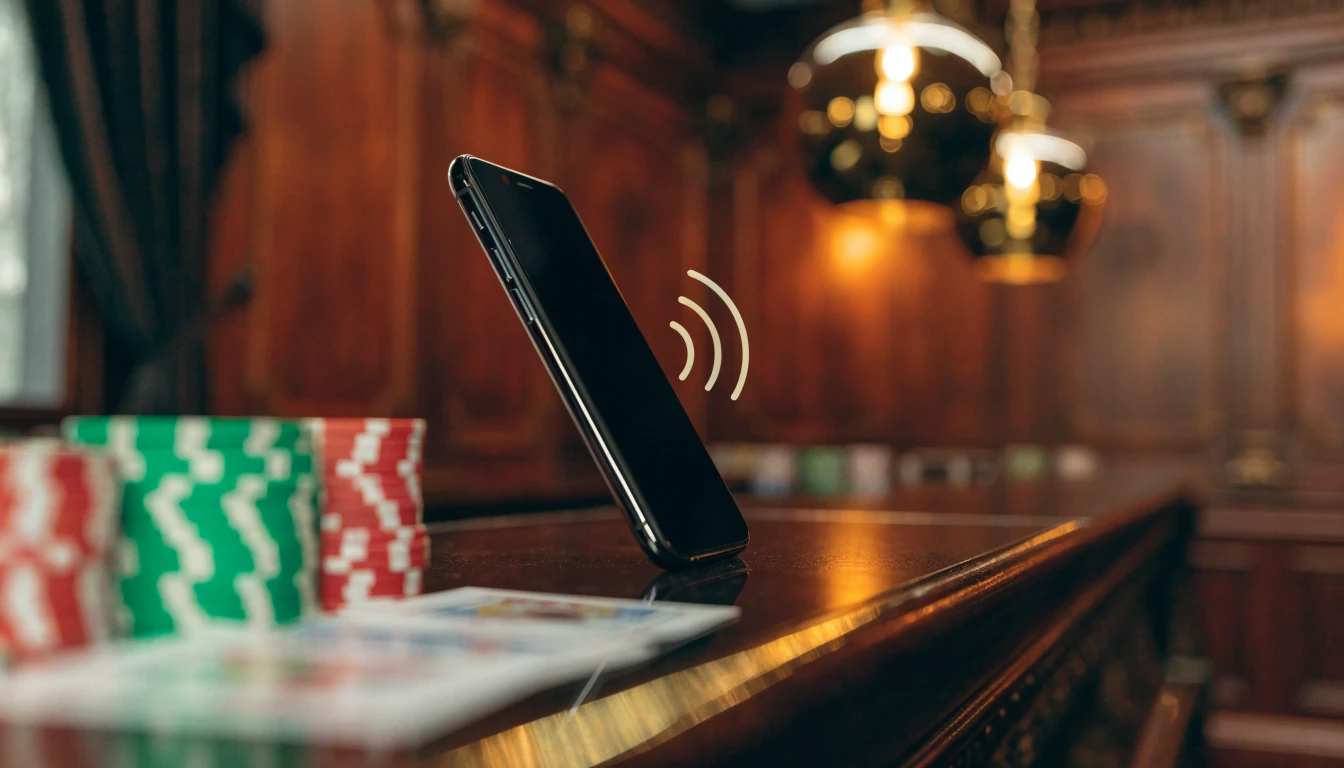
Google Pay availability depends on the account’s cashier, while payment choice can affect deposits, withdrawals, bonuses and limits.
Google Pay at UK Casinos: Availability Is a Cashier Question
A casino’s general payment page is not enough to establish that Google Pay can be used for a UK account. Payment logos tend to compress several different arrangements into a row of familiar names: a card brand, a bank transfer service and a digital wallet may sit side by side, although each works through a different route. Google Pay needs to be shown as an available option in the operator’s own cashier, not inferred from the presence of a card logo.
That distinction matters when looking for casinos that accept Google Pay in the UK. A specialist review may list Visa and Mastercard among the payment methods, but those names alone do not confirm that Google Pay is accepted. Nor do they establish that every card product bearing either brand is eligible. The practical answer is narrower than a broad payment list suggests: the cashier has to display the method for the account in question.
The word “card” can make the gap seem smaller than it is. A site may accept card payments without displaying a separate Google Pay option. Conversely, a page that mentions a familiar card network says nothing conclusive about whether a digital-wallet payment can be completed through the casino. These are related parts of the payment landscape, but they are not interchangeable labels.
So a reliable list of all Google Pay casinos in the UK cannot be assembled simply by copying payment icons from casino homepages or review summaries. A list that claims to be exhaustive would need to distinguish confirmed availability from a general statement about cards. Without that distinction, the promise of a complete directory is more confident than its evidence. Neat, but not useful.
The same caution applies to phrases such as “Android casino”. A casino may be accessible on an Android device, yet that fact does not determine what appears in its cashier. Device compatibility describes how a service can be reached; payment acceptance is a separate decision made by the operator and displayed at the transaction stage. One does not prove the other.
Casinos That Accept Apple Pay in the UK: What to Check
Nor does a page’s age settle the matter. Payment descriptions can be revised, and a method shown in an older review may not match the options currently presented to a UK customer. A broad statement that a casino supports Visa or Mastercard is not a durable confirmation of Google Pay availability. A casino’s own cashier is the relevant point of reference because that is where the operator presents the routes it will accept for that transaction.
The word “current” deserves care here. A list headed “best Google Pay casinos” can look definitive while concealing the question that matters most: whether Google Pay is actually offered by each named casino in the UK at the time of use. Adding a bonus or games label to that list does not strengthen the payment claim. A promotion, a game catalogue and a payment route are separate features; one cannot be used as evidence for another.
This also explains why a casino should not be labelled a Google Pay site solely because it accepts a card that might be associated with the wallet. The cashier needs to identify the payment method itself, rather than leave the customer to infer it from neighbouring options. If it does not appear there, the card logos elsewhere on the site do not resolve the question.
For anyone comparing operators, the useful record is therefore modest: note which payment methods the UK cashier actually presents, and treat a general card listing as a separate claim. The same discipline applies to newly launched casinos. “New” describes the operator’s age, not the certainty of its payment arrangements. A recent launch still needs an explicit cashier option before Google Pay can be counted as available.
There is no sound basis for presenting an unconfirmed roster as the definitive answer to whether Google Pay casinos are still available in the UK. The method may be visible at one operator and absent at another; the relevant evidence is the operator’s current cashier, not the resemblance between a wallet name and a card brand. A payment page can introduce the possibilities. Only the transaction screen can settle the practical question.
Market United Kingdom
Language English
Payment Focus Google Pay
Recommended online casinos
- BeOnBetBonus: 100% up to €500 + 100 FS · Payout speed: 1-3 business days
- WinBeastBonus: €5000 + 500 FS + €650 Freebet · Payout speed: 1-3 business days
- BritsinoBonus: Welcome Package – Get your £2,200 + 2,000 FS · Payout speed: 1-3 business days
- AmunbetBonus: Join now and get 450% up to 2,700 GBP + 450 FS · Payout speed: 1-3 business days
- x3betBonus: Welcome Pack 100% Up to £1.000 + 200 Free Spins · Payout speed: 1-3 business days
- NightLuckBonus: Welcome Pack + 805% Up To 6400€ + 280 FS · Payout speed: 1-3 business days
When Google Pay Is Not an Option: Other Ways to Pay
If Google Pay does not appear in a casino’s cashier, the alternatives are not interchangeable. Some routes connect directly to a bank account, some use a card, and others move money through a separate wallet or voucher. Their names can look like a tidy menu; their practical roles are less tidy.
Cards: the familiar route
Debit cards remain a common option at UK casinos. Visa and Mastercard are among the card brands listed by operators, although a logo on a general payments page does not settle whether a particular card product will work. The cashier is where the available routes for an account become clear.
A debit card draws on money in a bank account, rather than extending credit. That distinction matters in Britain’s regulated gambling market: remote gambling operators cannot accept credit-card payments for gambling. A card carrying a familiar brand is not, by itself, proof that every product issued under that brand is eligible.
Cards are straightforward in concept: the casino takes a payment from the card account. They are not a universal answer, though. The cashier may show a card route but reject a particular transaction, or may not offer that route to every customer. A logo is not a promise.
Casinos That Accept iDEAL in the UK: What to Check
Bank-linked payments
Open banking services and ordinary bank transfers move funds through a bank account rather than a separate prepaid balance. They can be useful where a player prefers to authorise a transaction through their banking service instead of entering card details.
A specialist casino review reports that open banking and bank transfers can support instant deposits and fast withdrawals at many sites. That is a description of some operators, not a guarantee attached to the method itself: the cashier determines what a particular casino supports and how it handles the route.
The two terms are related, but not identical. An open banking payment is authorised through a banking connection; a bank transfer sends funds from one account to another. Both depend on the casino actually offering the option. Neither label establishes that the same route can be used for both paying in and taking money out.
PayPal and other e-wallets
PayPal sits between the bank or card account and the casino. Rather than giving the casino the underlying payment details directly, the customer uses the wallet account to authorise the transaction. Its role is therefore different from a bank transfer, even if the money ultimately comes from a bank.
A specialist casino review characterises PayPal as popular for convenience and speed, while also noting that some operators may not count it towards promotional eligibility. That qualification belongs to the individual offer and cashier, not to PayPal as a universal rule.
Debit Cards
Common via Visa and Mastercard, drawing directly from bank accounts.
Bank-linked Payments
Includes open banking and bank transfers for direct account movement.
E-wallets
Intermediaries like PayPal, Skrill, or Neteller that sit between the bank and casino.
Prepaid Vouchers
Methods like Paysafecard used for one-way deposit-only transactions.
Skrill and Neteller are other e-wallet names found at some casino sites. A specialist casino review reports that these wallets are sometimes excluded from promotions. Their presence in a cashier tells only part of the story: the offer terms may treat a wallet payment differently from a card or bank-linked payment. The payment route and the promotion are separate decisions.
An e-wallet can be useful for keeping transactions distinct from everyday bank activity, but it adds another account to manage. The wallet must belong to the same customer who holds the casino account; mismatched ownership details can create avoidable friction. That is a matter of transaction checks, not a special feature of one brand.
Prepaid vouchers
Paysafecard works differently again. It is a prepaid voucher, purchased in advance and entered as a payment code. Its defined role is deposit-only: it can put funds into a gambling account, but it is not a route for receiving a payout.
That makes it unlike a debit card, bank transfer or wallet that may be available for transactions in both directions. A voucher can suit someone who wants to set aside a fixed prepaid balance, but the one-way nature matters. It should not be mistaken for a complete payment arrangement.
The cashier is the dividing line
The alternatives to Google Pay are not a ranking of better and worse options. They are different mechanisms, with different account relationships and different functions. Cards draw on a bank account; open banking and transfers connect to one; e-wallets add an intermediary; Paysafecard is a prepaid deposit route.
Casinos That Accept Giropay in the UK
Availability varies by operator, and a general payments page may not show which methods are currently enabled for a particular account. The cashier is the practical point of confirmation. It also distinguishes a deposit option from a withdrawal option: a method appearing in one list does not establish that it works for both.
That small distinction is less glamorous than a payment logo, but considerably more useful.
Deposits, Minimums and the Offer Fine Print
A payment button in a cashier answers only part of the question. It indicates that a route is presented for a transaction, not that every deposit amount qualifies for a promotion or that the method is treated identically under the offer’s terms. With Google Pay, the first point to establish is whether the cashier actually presents it for the account in question. A general payment page cannot settle that detail, and a bonus advertised elsewhere does not confirm that a Google Pay deposit will trigger it.
The minimum can vary with the payment method. A specialist review reports casino minimum deposits in the £10–£20 range, with the amount depending on the selected route. That is a reported range, not a promise that every casino or every cashier will use those figures. The amount shown beside a payment option at the point of deposit is the operative one. If the chosen method has a higher minimum than the amount intended for a deposit, the transaction may not proceed as expected.
Do
- Check the specific cashier for Google Pay availability.
- Confirm the minimum deposit amount for your chosen route.
- Read the offer terms to see if your payment method is eligible.
Don’t
- Assume a general card logo means Google Pay is accepted.
- Rely on a site’s age or device compatibility as proof of payment support.
- Treat a successful deposit as automatic proof of bonus eligibility.
The offer’s own wording matters just as much. A promotion can set a qualifying deposit threshold, restrict eligible payment methods or require a particular bonus to be selected before depositing. Those conditions are separate: a deposit may be accepted while still failing to meet the promotion’s requirements. The cashier and the promotion terms therefore need to be read together, rather than treating a successful payment as proof that a bonus has attached.
Payment eligibility can be less visible than the headline offer. PayPal is valued for speed and convenience, but a specialist review has reported that it may be excluded from bonus eligibility. That observation should not be turned into a rule for every operator: terms can differ and change. The useful distinction is between a method being available for deposits and that same method being accepted for a particular offer. If the terms name excluded routes, those details take precedence over a general “new customer” or “welcome” label.
This is especially relevant to offers described as free spins or as requiring no deposit. The wording of an offer does not establish that a particular payment method is supported, nor does it make a payment necessary where the promotion is genuinely deposit-free. Eligibility may still depend on the promotion’s conditions, which can include registration steps or restrictions on who can claim it. A no-wagering claim also needs its own definition in the terms: the phrase should not be assumed to mean that every route qualifies or that every win is free of conditions.
Casinos That Accept Entropay in the UK: What to Check
There is a small but important difference between “no minimum deposit” and “no minimum for this payment route”. A promotion may have no qualifying deposit because it does not require one, while the cashier can still set a minimum for an ordinary paid deposit. Conversely, a low cashier minimum does not remove a promotion’s separate threshold. The labels belong to different parts of the transaction.
For a Google Pay deposit, the practical check is therefore specific: confirm that the method appears in the cashier, note the minimum shown for it, then read the offer terms for eligible payment routes and any qualifying amount. If Google Pay is absent, a bonus page cannot make it available. If it is present, that still does not settle promotion eligibility. A cashier accepts money; the terms decide what the money counts for.
Mobile Slots and the Payment Step
A mobile slot does not take a payment. The game runs inside a casino account; deposits are handled separately through the operator’s cashier. That distinction matters when looking for online slots payable with Google Pay in the UK: a game that works on a phone says nothing, by itself, about which payment methods the casino accepts.
On a mobile site or app, the relevant check begins outside the game. Open the account’s cashier or deposit area and inspect the methods actually displayed there. If Google Pay is not offered, seeing it mentioned elsewhere on the site—or seeing a Google Pay symbol on a device—does not establish that it can be used for that account. Payment availability is an operator decision, and the cashier is where the current options appear.
Mobile slot games do not handle payments; all transactions must be managed through the operator’s cashier or deposit area.
The same caution applies to a Google Pay payment advertised alongside mobile slots. It may describe a general service or a payment option at a particular operator, not a facility built into every slot game. A search for real-money slots using Google Pay can therefore blur two separate things: access to a game on a mobile screen and the payment route available when funding the casino balance.
A specialist review lists Visa and Mastercard, but that does not settle whether either is currently available to a UK customer through a particular mobile cashier, or whether a specific card product is eligible. The cashier’s own display is the practical point of confirmation. A method listed on a general payments page may not appear in the account’s deposit flow.
Mobile interfaces can make this distinction easy to miss. A player may move from a game to a cashier without leaving the app or browser, so the payment panel can feel like part of the game. It is not. The slot supplies the play; the remote gambling licensee controls the account and the payment choices. A game’s title, provider or mobile compatibility cannot prove that Google Pay is supported.
There is also a separate question behind “legit”. A payment label does not establish that a casino is authorised to serve people in Britain. Remote gambling licensees serving the British market must hold a UK Gambling Commission licence. The licence number can be checked on the Commission’s public register before depositing; mobile presentation and payment branding are not substitutes for that status.
Casinos That Accept Solana in the UK: What to Check
Before a mobile deposit, the sequence is straightforward: confirm that the account is with the intended operator, open its cashier, and check whether the desired method is actually offered there. Operators must verify a customer’s age before permitting a deposit. Once those account-level conditions are met, the cashier—not the slot screen—determines what payment route is available.
That is the boundary. A mobile game can be ready to play while a preferred payment method remains unavailable. The two systems meet at the cashier, not inside the reels.
Real-Money Play and the Route Back to the Payer
A deposit and a payout are not opposite movements performed at the same speed. A card deposit may appear instantly in a casino balance, while a withdrawal can take several business days. A specialist review describes that contrast, but the timing of an individual payment still depends on the operator’s process and the payment route. “Instant” marks the arrival of a deposit, not a promise about the journey home.
That distinction matters when real-money slots are involved. A game may show a balance ready for play, but it does not determine how winnings are paid out. The casino’s cashier and withdrawal process govern that part. A payment option displayed for deposits should not, by itself, be taken as confirmation that the same route is available for withdrawals.
UK anti-money-laundering controls commonly require a payout to return to the original payment source. This closed-loop approach helps establish where funds came from and where they are going; it is a routine safeguard, not an unusual penalty attached to a win. The route back can therefore be less flexible than the route in. A balance may be easy to fund, while a withdrawal follows the operator’s checks and the payment method’s rules.
Attention UK anti-money-laundering controls often require payouts to be returned to the original payment source used for the deposit.
Consistency helps. When the casino account and payment route belong to the same customer, basic ownership details are less likely to create avoidable friction. A mismatch can prompt questions or checks before a transaction proceeds. The names need to belong together. That is not paperwork for its own sake: payment systems are expected to make the movement of money legible.
The first withdrawal can also take longer if KYC is still being completed. Internal approval is part of the overall wait, so a transfer’s apparent speed after approval does not necessarily tell the whole story. A pending request may be in the casino’s review stage rather than moving through the bank or payment provider. Those are different parts of the journey, though a balance display rarely makes the distinction vivid.
For anyone looking up Google Pay slots for real money, the central point is that the game and the payout route are separate questions. Even if a cashier offers a particular deposit method, that does not establish that winnings will be returned through it. The operator may need to follow closed-loop rules and complete its checks before releasing funds. A smooth deposit is only the first leg.
This is why the useful detail is not simply whether a casino can take a payment, but how the original funds are identified and how the withdrawal is handled. The same route may be required for the return, and verification can affect when it happens. Money enters as a transaction. It leaves as a transaction under scrutiny.
Casinos That Accept POLi in the UK: What to Check
Deposits, Withdrawals and the No-Credit-Card Rule
A payment button can describe how money enters an account without saying how it can leave. That distinction matters when comparing a deposit via Google Pay with a direct withdrawal: the cashier may show a route for deposits, while withdrawals follow a different set of options. Each direction needs to be checked separately. A method appearing beside the deposit field is not proof that it supports payouts.
The same caution applies to searches for Google Pay casinos offering fast debit withdrawals or instant banking. Those phrases combine separate questions: whether the casino accepts the method for deposits, whether it supports withdrawals to it, and how long any payout takes. The payment name alone cannot answer all three. Nor does a payment option for casino deposits mean that a particular slot accepts that method; payments are handled through the operator’s cashier, not by the game.
There is also a firm legal boundary around credit-card payments for gambling. The UK regulator introduced the ban on 14 April 2020, and it remains in force. A UK-licensed casino cannot accept a credit card for a gambling deposit. The rule also covers credit-card funding routed through a money service business, so changing the label or adding an intermediary does not make the underlying source acceptable.
Legal Restriction
UK-licensed casinos are strictly prohibited from accepting credit-card payments for gambling purposes.
Digital wallets require the same attention to funding. If a wallet permits credit-card funds to be used for gambling, a UK-licensed operator cannot accept that wallet payment for gambling. The brand shown on a checkout screen is not a substitute for understanding the payment route behind it. A debit card and a credit card are not interchangeable simply because both may sit within a digital wallet.
For withdrawals, consistency can make the transaction path clearer: one account held in the customer’s own name and used for both depositing and withdrawing is often the cleanest arrangement. Switching routes may mean extra checks, and a deposit option should never be assumed to double as a payout method. Ownership details matter. So does the direction of travel.
Questions about a “no deposit” offer or the largest such bonus do not change these payment rules; promotion terms are a separate matter. Likewise, a search for Google Pay and credit-card casinos does not make credit-card gambling permissible. The relevant check is not just whether a cashier displays a familiar payment logo, but whether the route is allowed and whether it works for the intended transaction.
No borrowed shortcut.
Bonuses Depend on the Payment Route
A payment method and a promotion are separate parts of a casino’s terms. A site may advertise a welcome offer while excluding particular deposits from eligibility; the headline alone does not settle whether a payment made through a digital wallet qualifies. The relevant wording is normally attached to the promotion’s terms, where eligible and excluded methods should be stated.
Casinos That Accept Click2Pay in the UK
A specialist casino review reports that PayPal can be excluded from bonus eligibility, despite its appeal for speed and convenience. That is not a rule that applies to every offer or operator. The terms attached to the specific promotion remain decisive, and they can change. The same caution applies to Skrill and Neteller: a specialist review reports that these e-wallets are available at some sites and are often excluded from promotions. Availability at a casino does not, by itself, mean a deposit through that route counts towards a bonus.
Google Pay requires the same distinction. A search for casinos offering a welcome bonus alongside Google Pay does not establish that a particular casino supports the wallet, or that a Google Pay deposit qualifies for its offer. Nor does a slots promotion become a Google Pay bonus merely because the casino has slots and advertises a promotion. The payment route and the offer’s eligibility conditions have to match at the operator.
The fine print matters for different kinds of offers. A welcome offer may specify which deposits qualify; a bonus code may have its own conditions; and a no-deposit promotion may not depend on a deposit method at all. The title of an offer cannot fill in those details. Where the terms exclude a wallet, using that wallet may mean the promotion is unavailable even if the transaction itself is accepted.
There is a small but useful distinction here: a successful deposit confirms only that the payment was processed. It does not confirm that a bonus has been credited, or that the deposit satisfies the promotion’s rules. Payment and promotion, separately.
Bonus Readiness
- Verify Google Pay is visible in the active cashier.
- Check if the deposit meets the specific method’s minimum.
- Confirm the payment route is not excluded in the promotion terms.
- Ensure the bonus is selected before completing the transaction.
Before opting into an offer, the operator’s current terms should be checked for named exclusions and any requirement to select or enter the promotion before depositing. If a chosen route is excluded, the safer interpretation is that the deposit will not qualify, rather than assuming the casino will apply the bonus later. A bonus is an agreement with conditions, not a decoration attached to the cashier.
Small Deposits, Limits and Financial Controls
A small opening deposit can look like a simple way to test a casino’s cashier, but the minimum is set by the payment route and the operator, not by the name of a wallet on a page. A specialist casino review places common minimum deposits in the £10–£20 range, while noting that the selected method can change the figure. That is a guide to the range reported there, not a universal tariff.
The same caution applies to a search for a £5 Google Pay deposit. A low figure cannot be assumed to apply to every casino, or to Google Pay in particular. Whether that payment route appears at all, and what minimum the cashier attaches to it, are separate questions. A mobile wallet does not create a single market-wide deposit threshold.
Maximums are less tidy still. A casino may set caps per transaction, per day or per month, and those ceilings can depend on the payment method and the status of the account. A method that permits a modest first transaction may not carry the same ceiling as another route; an account’s position can also affect what is available. The cashier and account controls, rather than a general payment-method label, show the terms that apply to a particular transaction.
Casinos That Accept Monzo in the UK: Payment Facts
There is a public-interest reason for limits appearing before money moves. UK Gambling Commission rules require remote gambling licensees to ask new customers to set a financial limit before the first deposit. They must also make account-level limit controls accessible. The prompt is not merely another box in the registration sequence: it gives spending boundaries a place in the account before gambling begins.
Those controls matter independently of a payment method’s minimum or maximum. A cashier may accept an amount within its own transaction rules, while the account’s chosen financial limit imposes a different boundary. The amount permitted by the payment route is not a recommendation about what to deposit, and the ability to set a limit is not a reason to treat a displayed maximum as a target. Two systems, doing different jobs.
For a Google Pay deposit, the practical figures therefore belong to the operator’s live cashier and account settings: check the available minimum and maximum there, and distinguish them from the account-level financial limit. A headline figure cannot settle both.
Comparing Payment Alternatives by Cost and Speed
There is no single payment route that is cheapest for every UK casino transaction. The amount lost in fees can depend on more than the option shown in the cashier: a casino charge, a payment provider’s fee, a card issuer’s or bank’s charge, currency conversion and, where relevant, network fees can all affect the total. A specialist payment review also cautions that an exchange-rate spread may cost more than a clearly displayed flat fee. The visible price is not always the whole price.
Final Summary
- The cashier is the only definitive source for current payment availability.
- Payment methods and bonus eligibility are separate, independent factors.
- Deposit and withdrawal routes may not be the same due to regulatory rules.
- Always verify the specific minimums and fees associated with your chosen method.
That makes comparisons specific to the account, transaction and currency. A payment route that appears free at the casino may still involve a charge from a bank or provider. Where a balance is converted, the rate used matters as well as any stated fee. Before judging one method against another, the relevant cost is the sum taken from the payer and the amount credited to the casino account, not simply the cashier’s fee line.
Speed has its own qualifications. A specialist payment review notes that bank-transfer delivery can depend on the bank’s cut-off time, whether the transfer falls over a weekend, and any currency conversion. A transfer initiated late in the day may therefore follow a different path from one sent earlier, while conversion can add both cost and processing complexity. “Bank transfer” is a route, not a promise of identical timing.
Other alternatives have different cost points to inspect. With a debit card, the casino’s terms and the card issuer’s charges are separate matters. An e-wallet may involve provider fees or currency conversion; a prepaid voucher has its own deposit conditions. Open banking can connect a payment to a bank account, but the relevant bank and casino terms still determine what the transaction costs. None can be crowned the best Google Pay alternative on the strength of its name alone.
A practical comparison is less glamorous than a ranking: check the cashier’s charge, the provider or bank’s terms, the currency and the rate applied. Then consider whether the expected delivery time suits the transaction. A low visible fee can conceal an expensive conversion; a fast route can still carry a charge. The arithmetic belongs to the actual payment, not the label.
Casinos That Accept AstroPay in the UK
Payment Choice Does Not Establish GamStop Status
A casino’s payment options and its connection to GamStop describe different things. Google Pay, if offered in a cashier, identifies a way to fund an account; it does not show whether the operator participates in the self-exclusion scheme. Equally, a site’s claim that it is not on GamStop does not establish that Google Pay is available. Neither label proves the other.
That distinction matters when a site is promoted as both a Google Pay casino and a non-GamStop option. The combination may sound like a useful filter, but it is not a dependable description of the operator’s status. Payment availability can depend on the individual cashier, while self-exclusion status is a separate matter. One cannot be inferred from the other.
Money returning to the payment source does not settle the question either. Remote gambling businesses may send funds back through the route used to deposit them as an anti-fraud and anti-money-laundering safeguard. This closed-loop practice concerns the movement and ownership of money, not whether a casino is connected to GamStop. If a different route is involved, further checks may be needed before funds can be handled.
For real-money play in the UK, the operator’s legal position is a separate check again: remote gambling businesses serving the British market must hold the relevant UK Gambling Commission licence. The licence number can be checked on the Commission’s public register before depositing. A payment logo, a claim about GamStop, and a licence each answer different questions. None should be treated as a substitute for the others.
The useful distinction is plain, if not especially marketable: a payment method is not a measure of self-exclusion status. Nor does the route by which money is returned act as a hidden indicator. Labels can travel together in an advert; their meanings do not.
Which method has the lowest fees?
There is no universally cheapest method. Compare the casino and payment-provider charges, any currency-conversion spread, and any network or bank fees for the amount you plan to send.
What is the fastest withdrawal method for UK casinos?
PayPal, open banking services, and debit cards linked to fast payout systems are generally among the quickest. The casino’s approval process and whether your account is verified also affect the time.
Do UK casino withdrawals require verification?
Verification can be needed, and first withdrawals may take longer while it is completed. A verified account can help avoid delays in the casino’s approval process.
Can I use a credit card at 333 Casino in Great Britain?
No. UK remote gambling operators cannot accept credit-card payments for gambling.