UK Non GamStop Casino Meaning and Licence Features
 Available in GB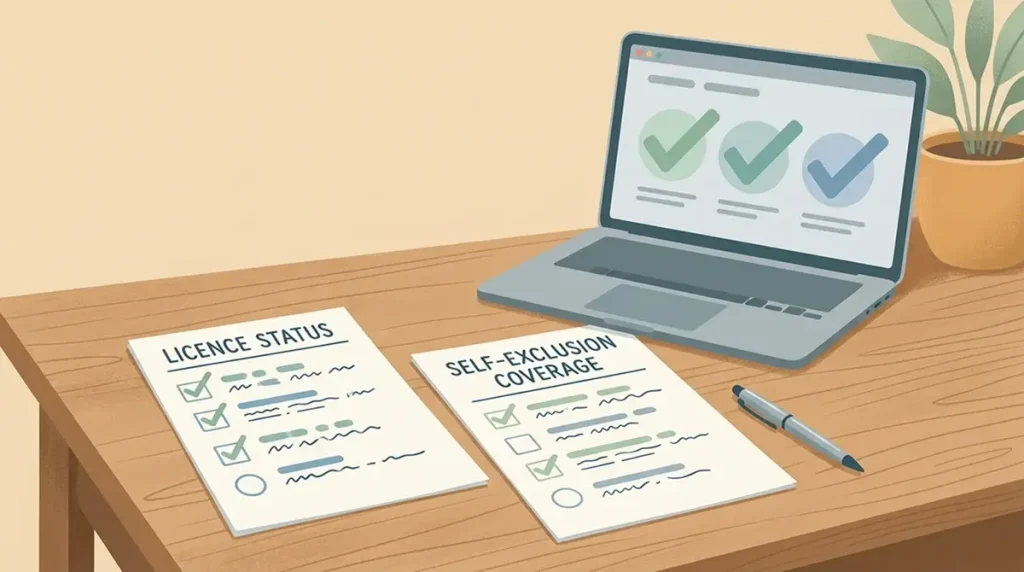
The phrase “casino not on GamStop” is usually used for a gambling website that is not covered by the GAMSTOP online self-exclusion scheme. That wording can sound simple, but it mixes together several different issues: whether a site takes part in GAMSTOP, whether it is licensed for Great Britain, whether it follows regulated-market consumer protections, and whether gambling there would be a harmful step for the person considering it.
The safest way to read the phrase is not “more choice” or “better access”. It is a warning to slow down and separate the facts. A site outside GAMSTOP coverage is not automatically lawful for Great Britain consumers, not automatically safer, and not automatically easier to use fairly. It may simply be outside the protection system that the reader expected to apply.
The Exact Meaning of Non GamStop Gambling Sites
GAMSTOP is a national online self-exclusion scheme used by gambling companies licensed in Great Britain. The key point is that all online gambling companies licensed in Great Britain must be part of GAMSTOP. GAMSTOP also states that it cannot stop access to organisations that do not take part in the scheme. That is a protection boundary, not a recommendation to look for organisations outside it.
When a website or advert uses wording such as “not on GamStop”, it may be trying to tell the reader that the site is not participating in that self-exclusion system. It does not, by itself, tell the reader who operates the site, where it is licensed, whether it is allowed to provide gambling to Great Britain consumers, how disputes are handled, how identity checks work, or what will happen if a withdrawal is delayed. For a comprehensive overview of safety measures, always refer to a trusted UK guide to casinos outside GAMSTOP coverage before making any decisions.
For a UK reader, that distinction matters. Some official gambling information is written specifically for Great Britain. Where that is the case, it is better to use the narrower wording than to stretch the point to every UK situation. The practical lesson is still clear: do not rely on a promotional phrase when the real question is whether the site is properly licensed, accountable and suitable for your circumstances.
Self-exclusion coverage is not the same as licence status
One common misunderstanding is to treat “not on GamStop” as if it were a licence category. It is not. Self-exclusion coverage describes whether a protection scheme can help block access to participating online gambling companies. Licence status describes whether a gambling business is authorised by the relevant regulator to provide gambling services in the market being discussed.
The Gambling Commission says that providing gambling to Great Britain consumers without a Gambling Commission operating licence or a valid exemption is illegal for the provider, regardless of where that provider is based. It also says that a licence from another country does not authorise an operator to provide gambling to consumers in Great Britain. Those points should prevent a reader from accepting a foreign badge, a logo or a short licence claim as proof that everything is in order.
This page does not decide whether any named website is lawful or unlawful. That kind of conclusion needs a current check of the official record and the exact site details. The important takeaway is narrower and more practical: if a site is outside GAMSTOP coverage, the reader should not assume that regulated Great Britain protections still apply.
A quick comparison
| Question | GB-licensed and in GAMSTOP | Outside GAMSTOP coverage or not verified |
|---|---|---|
| Self-exclusion coverage | Online companies licensed in Great Britain must take part in GAMSTOP. | GAMSTOP says it cannot prevent access to non-participating organisations. |
| Licence check | The official public register should show relevant licence information when the details match. | A foreign licence claim or badge is not enough to show authority for Great Britain consumers. |
| Complaint routes | Regulated businesses are expected to have complaint handling and recognised dispute arrangements. | Complaint routes may be harder to confirm before money has already been transferred. |
| Consumer-protection checks | Age, identity, terms, account information and safer-gambling controls sit within a regulated framework. | The reader may need to verify each protection separately and should treat gaps as serious warning signs. |
What the phrase should make you check
Before treating any gambling site as usable, check the basics in a calm order. First, look at the exact domain name and the name of the business behind it. Promotional pages can use similar wording, trading names or badges that are hard to compare unless you write down the exact details. Second, use the official public register rather than relying on a site’s own claim. Third, read the account terms, withdrawal terms, complaint information and privacy information before paying anything.
That order matters because a gambling website is not only a game screen. It is also a money transfer, an account agreement, an identity check, a data relationship and, for some people, a risk to control over gambling. A phrase that appears to offer a simple answer may hide several separate decisions.
- Licence: Can you verify the business and domain on the official register for Great Britain?
- Coverage: Is the site within the self-exclusion protection you expected to rely on?
- Money: Are deposit, withdrawal and bonus conditions visible before payment?
- Identity: Are age and identity checks explained clearly rather than advertised as something to skip?
- Complaints: Is there a clear route if the account is restricted or a withdrawal is disputed?
- Personal safety: Are you looking because you want to gamble despite an exclusion or a block?
When the personal safety question comes first
If you are already self-excluded, worried about control, chasing losses or searching for a way to gamble despite a block, the most useful next step is not another gambling comparison. If you are struggling to control your habits, it is crucial to understand the steps to take if you are self-excluded and feel pulled back to gambling. It is to strengthen the protection around you. That may mean keeping the exclusion in place, using bank gambling blocks, using blocking software, speaking to a support service, or asking someone you trust to help you create distance from gambling triggers.
This is not about blame. Self-exclusion exists because access can become hard to manage. The fact that some organisations sit outside a scheme does not make them suitable alternatives. It may make the situation riskier because the protection you chose may not follow you there.
Warning signs in wording
Some public claims deserve particular caution. “No checks” can be a warning sign because licensed online gambling businesses in Great Britain must ask users to prove age and identity before gambling. “Foreign licensed” may sound official, but a foreign licence does not authorise a business to provide gambling to Great Britain consumers. “Guaranteed withdrawal” or “instant cashout” should not be trusted unless the terms, account status and payment conditions are all clear. “Crypto only” or pressure to use unusual payment routes can make recovery, complaint handling and account tracing harder.
The right response to a warning sign is not to search for a more convincing slogan. It is to stop and verify. If the basic checks cannot be completed before money is transferred, the safer decision is to avoid transferring money.
Where to go next
Use the next page according to the question you actually need answered. If you need to know how to check a site on the official record, read how to check a gambling site on the official register. If the real issue is that self-exclusion is in place or gambling feels difficult to control, go to support steps for self-exclusion. If payment blocks or bank tools are part of the concern, the dedicated page on bank blocks and gambling payments keeps that money question separate from this definition page.
Common questions
Does “not on GamStop” mean a site is legal for UK users?
No. The phrase does not prove licence status. For Great Britain, the important check is whether the gambling business is authorised by the Gambling Commission or has a valid exemption for the activity in question.Does being outside GAMSTOP mean a site is safer or easier?
No. It may mean the opposite for someone who relies on self-exclusion. It can also make complaint, identity, payment and licence checks more important before any money is transferred.Should I use a foreign licence claim as proof?
No. A licence issued in another country does not authorise a business to provide gambling to Great Britain consumers. Use the official register and treat mismatched details as a reason to stop.