
Casinos That Accept Debit Cards in the UK
 Available in GB
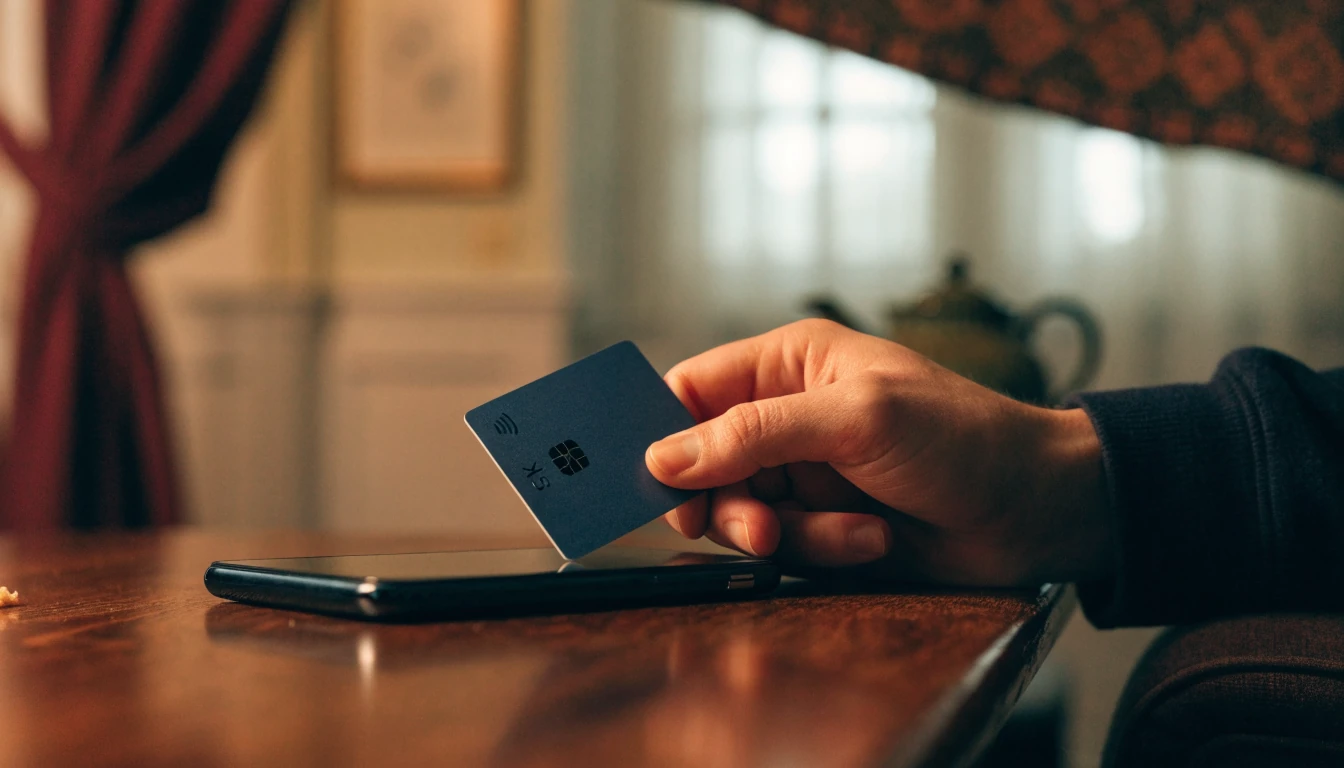
Debit-card deposits may be straightforward, but compatibility, withdrawal timing and bonus terms depend on the casino and payment route.
Debit Cards Are Welcome; Credit Cards Are Not
For people looking for debit card casinos in the UK, the basic distinction is clear: debit cards are commonly accepted, while credit-card payments for gambling are prohibited. Visa and Mastercard are among the debit-card networks used at UK casinos. That does not make every card bearing either name interchangeable, but it establishes the ordinary starting point: a debit card may be used to fund a gambling account; a credit card may not.
The distinction is more than a cashier preference. It reflects a rule that applies to remote gambling in the UK. On 14 April 2020, the regulator introduced the ban on credit-card gambling. The rule has not since been relaxed. A casino cannot make credit-card gambling permissible by displaying a familiar logo or by describing the payment in softer terms. The relevant question is whether the money is being supplied through a credit-card payment for gambling.
For customers, this means that searches for online casinos accepting debit cards are not simply searches for any card-shaped route into a cashier. The funding source matters. Debit cards draw on funds available through the linked account; credit cards involve borrowing. The UK rule draws a firm line between those forms of payment rather than treating them as two versions of the same convenience.
The familiar card, and the important distinction
Visa and Mastercard are widely recognised names, and UK casinos commonly accept debit cards carrying those networks. That is why debit card deposits are a standard payment route in the market. The word “commonly” matters: it describes broad acceptance, not an assurance that every card product will work at every casino. The cashier remains the place where an operator presents the methods available for its service.
For this opening distinction, however, the network logo is secondary. A debit card is not a credit card merely because both use the same payment network. Equally, a credit card does not become acceptable for gambling because a transaction is routed through a familiar brand. UK rules concern credit-card payments for gambling, not the visual design of the card or the way a cashier labels its buttons.
Casinos that accept Bitcoin in the UK: what to check
The ban also rules out a simple workaround through a money service business. Remote operators cannot accept credit-card payments for gambling, including credit-card funds routed through such a service. The route does not change the underlying character of the payment. A detour is still a detour, not a different road.
This is why “casinos that accept debit card” and “casinos that accept cards” are not equivalent descriptions. The first refers to a commonly available form of payment. The second can blur a distinction that UK regulation makes deliberately. For a UK-facing casino, accepting debit cards does not imply permission to accept credit cards, and a payment page should not be read as an invitation to use whichever card happens to be at hand.
A rule with a date attached
The prohibition began on 14 April 2020. Its continued effect is straightforward: credit-card gambling remains banned. It is not a temporary cashier setting or a condition that varies from one casino to another. A remote gambling operator serving the British market must follow the UK framework, regardless of the operator’s location.
The Gambling Act 2005 governs gambling in England, Wales and Scotland, though not Northern Ireland. For customers in Great Britain, remote gambling operators serving the market must hold the relevant Gambling Commission licence. That regulatory structure sits behind the payment distinction: a legal online casino serving UK players operates under rules that do not permit credit-card payments for gambling.
The practical language can sometimes make the boundary sound less exact than it is. A payment method may have several features, or a financial account may offer more than one way to access funds. Yet the rule is not an invitation to infer eligibility from convenience. Credit-card funds cannot be used for gambling through a wallet where the wallet permits that use, and credit-card funding routed through a money service business is also prohibited. The rule follows the funds into the transaction.
Debit cards draw on funds available through the linked account, whereas credit cards involve borrowing. UK rules draw a firm line between these two forms of payment.
Debit cards remain a familiar option, but their acceptance should not be mistaken for universal compatibility or a promise about every individual card. Those are separate questions. The essential point is narrower and firmer: UK casinos commonly accept debit cards, including Visa and Mastercard, while credit-card gambling has been prohibited since 2020. One door open; the other closed.
Recommended online casinos
- BeOnBetBonus: 100% up to €500 + 100 FS · Payout speed: 1-3 business days
- WinBeastBonus: €5000 + 500 FS + €650 Freebet · Payout speed: 1-3 business days
- BritsinoBonus: Welcome Package – Get your £2,200 + 2,000 FS · Payout speed: 1-3 business days
- AmunbetBonus: Join now and get 450% up to 2,700 GBP + 450 FS · Payout speed: 1-3 business days
- x3betBonus: Welcome Pack 100% Up to £1.000 + 200 Free Spins · Payout speed: 1-3 business days
- NightLuckBonus: Welcome Pack + 805% Up To 6400€ + 280 FS · Payout speed: 1-3 business days
What a Card Deposit Can Involve
A debit-card deposit has two kinds of boundary: the amount the cashier will accept in a single transaction, and the financial limit attached to the gambling account. They can look similar on a payment screen, but they do different jobs. One governs whether a particular payment can be made; the other is part of the operator’s controls over an account.
A specialist review puts the minimum deposit at roughly £10 to £20, with the figure depending on the payment method. That is a reported range, not a standard set across UK casinos. A card cashier may show a different minimum from another route at the same site, while another operator may set its own threshold. The amount displayed at the point of payment is therefore more useful than a general figure read elsewhere.
The minimum is a threshold, not a recommendation about how much to spend. Its practical effect is narrow: a deposit below it will not meet that cashier’s stated requirement. For someone comparing an online casino with debit-card funding, the advertised availability of cards says little about the size of the first permitted payment. The relevant detail sits in the payment flow, alongside whatever account controls the operator requires.
Diners Club Casinos in the UK: Payment Checks
Maximum deposits are variable too. A specialist gambling review describes limits that may apply per transaction, per day or per month, and notes that they can differ by payment method and account status. These are not interchangeable ceilings. A cashier may accept a payment within a per-transaction cap while the account has already reached a separate daily or monthly boundary. Conversely, a method-specific maximum may prevent a larger single payment even when the account’s broader limit would allow it.
Account status matters because payment limits are not necessarily fixed for every customer in the same way. The cashier may present a limit tied to the chosen route, while account-level conditions may affect what is available. A displayed maximum should consequently be read as a condition of that transaction or account, not as a universal promise about every debit-card deposit at the casino. The figures can change with the method and the account. No single ceiling tells the whole story.
The more significant boundary is set before the first deposit. UK Gambling Commission rules require remote gambling licensees to prompt new customers to set a financial limit before depositing, and to make account-level limit controls accessible. This places a pause between opening an account and funding it: the first payment is not simply a matter of entering card details and pressing a button. A financial limit is part of the account’s operating conditions.
Account Financial Limits
UK Gambling Commission rules require remote gambling licensees to prompt new customers to set a financial limit before depositing. This is an account-level control that is separate from the cashier’s minimum or maximum transaction thresholds.
That prompt should not be confused with the cashier’s minimum or maximum. The cashier threshold describes what a payment route will accept; the financial limit is an account control. One can be met while the other still shapes the transaction. A deposit might be large enough to satisfy the payment method’s minimum but inconsistent with the limit set for the account. The distinction is modest in appearance and substantial in purpose.
There is a social history in this small interruption. Gambling has often been presented as a private bargain between an individual and a game; modern regulation treats the moment before money enters the account as a point where the operator has responsibilities too. A prompt to set a limit makes financial restraint part of the transaction’s design, rather than leaving every boundary to the customer’s memory. It does not remove the possibility of harm. It makes the question harder to avoid.
The available controls matter after that first decision as well. Account-level limit settings are required to be accessible, so they are not meant to be a one-time screen that disappears once the account is funded. The cashier’s payment ceiling and the account’s financial controls remain separate parts of the arrangement. Their presence does not mean every route has identical thresholds, nor that an account can deposit any amount within its own chosen limit.
Casinos That Accept Instadebit in the UK: What to Check
For an online casino debit-card deposit, the useful checks are therefore specific: the minimum shown for the selected method, any maximum attached to the transaction, and the account’s own financial limit. The first tells whether the payment meets the cashier’s entry condition. The second marks the method’s boundary. The third belongs to the account. Treating them as one number obscures how the system is arranged.
The payment screen is not the whole policy. A debit card may be accepted, yet the amount permitted can still depend on the method and account conditions. A limit prompt may appear before the first deposit, while other controls remain available in the account later. These are not decorative hurdles: they define the terms on which money can enter a gambling account. At the cashier, the small print has a job.
The Cashier Is the Final Word on Card Compatibility
A Visa or Mastercard logo is a useful starting point, not a promise that every card carrying it will work. A debit card casino may display both networks among its payment methods, yet the cashier’s live list is what matters for a particular account and transaction. Network recognition and acceptance of an individual card product are not the same thing.
That distinction is easy to miss because payment pages tend to present a clean row of familiar logos. The neatness belongs to the page; the underlying payment system is less tidy. A card can carry a recognised network mark while the casino’s cashier does not offer that product for the account, or the transaction may not be accepted. Current availability and card-product eligibility need to be checked at the point where the payment is actually set up.
Attention A Visa or Mastercard logo is a useful starting point, but it is not a guarantee that every specific card product will be accepted by a casino’s cashier.
A specialist review lists Visa and Mastercard for the sites it covers, but that is not a standing guarantee of UK availability for every card. Payment menus can differ between operators and accounts, and they may change. For anyone comparing a UK debit card casino with another, a general methods page is therefore only a preliminary clue. The cashier is the practical test.
This is also why the phrase “accepts Visa” can be too broad to settle the question. It identifies a network, not the full terms of an individual card product. The distinction is less dramatic than a declined transaction, but more useful: it shifts attention from a familiar logo to the actual options displayed for the account. No need for guesswork.
Currency deserves the same early attention. A cashier may support GBP, but the account’s selected currency should be confirmed before the first transaction. If the account is set to a different currency, a deposit from a sterling card may involve conversion rather than a direct sterling payment. The displayed amount and the amount ultimately taken from the bank account may then differ because they are being measured in different currencies.
A specialist review states that GBP is supported on the pages it examined. That is helpful, but it does not replace checking the account itself. The relevant detail is not simply whether a casino mentions pounds somewhere on its site; it is whether the account is denominated in GBP before a payment is made. A currency setting can be easy to overlook amid registration screens, but it shapes what the cashier shows and how a transaction is handled.
Casinos that accept Upaycard in the UK: what is confirmed
For people comparing the best debit card online casinos in the UK, compatibility is therefore not a trophy awarded to a network name. It is a combination of what the operator currently presents in its cashier, whether the particular card product is eligible, and whether the account is set to the intended currency. A casino that lists a familiar card brand may still be a poor fit if its live payment screen does not support the card in hand.
The sensible comparison is a modest one: inspect the available card options while logged into the relevant account, and confirm the account currency before sending money. This does not require treating every payment page as a mystery, only resisting the assumption that a logo settles every detail. The cashier supplies the answer at the point it matters.
There is a small lesson in the design of modern payments here. A global network mark suggests a borderless system, while the transaction itself remains particular: one account, one card product, one currency setting. The logo travels easily. Acceptance does not always follow at the same speed.
For a UK debit card casino, then, the dependable test is not the broad claim that a site takes Visa or Mastercard. It is whether the cashier currently offers the relevant card for that account, and whether the account is set to GBP before the first payment. That is the difference between a payment method advertised in general and one available in practice.
Payment Timing
Money going into a casino account can be nearly instant, but withdrawing those funds back to a card may take several business days.
Deposits Can Be Instant; the Money Coming Back May Not Be
A debit-card deposit can appear in a casino balance almost as soon as the payment is made. That quick arrival has a counterpart, but not a mirror image: a specialist payment review describes withdrawals to a card as potentially taking several business days. The distinction matters because “card payment” sounds like one operation performed in reverse. It is not necessarily one.
For someone funding an account, the immediate change is easy to read. The balance updates, and the money is available for play. A withdrawal is less visible while it is travelling back: the casino balance may have changed, but that does not mean the funds have reached the bank account linked to the card. A completed request and money received are different events.
This is the small asymmetry hidden inside casino debit-card deposits. Money going in can be quick; money coming back can take longer. The phrase “instant deposit” describes the front end of a transaction, not a promise that every movement through the payment system will be equally swift. A specialist review’s account of several business days for a card payout is therefore a useful counterweight to the bright immediacy of a cashier screen.
The contrast is not unique to gambling, but it becomes conspicuous there because the two movements sit beside each other in one account. A customer sees a card accepted and a balance appear, then may expect the same card to carry a return at comparable speed. That expectation is understandable. Payment language often treats a route as a single pipe, when the experience at either end can differ.
Casinos That Accept Tether in the UK: Payment Checks
The UK market’s familiar card brands can make that expectation stronger. Visa or Mastercard may be named as deposit methods, yet the name of a network does not make a deposit and a payout identical in timing. The cashier communicates what it can accept; the bank statement records when a transaction becomes visible on the other side. Between those moments sits an interval that the word “card” neatly conceals.
That interval also changes how a casino balance should be understood. It is a record of funds held for play, not a live view of money already returned to a bank. A withdrawal request can therefore feel complete before the financial journey is complete. The language of screens tends to compress these stages; banking does not always oblige.
This is one reason payment speed is better judged in both directions. A casino debit-card deposit may be convenient precisely because it is quick to register, but the same measure cannot be assumed for money leaving the account. The outgoing journey may take several business days, according to the specialist review cited above. No contradiction, just two clocks.
For a section of the cashier designed to make money arrive, speed is the obvious virtue. For a payout, the relevant question is when the funds become available outside the casino. Those are separate measures, even when the same debit card appears in both. The screen is quick. The bank may be slower.
Do
- Check the live cashier list for specific card compatibility
- Confirm the account is set to the intended currency (e.g., GBP)
- Ensure account details match the payment method holder’s name
Don’t
- Assume a network logo (Visa/Mastercard) guarantees acceptance
- Confuse deposit speed with withdrawal speed
- Expect all deposit methods to work for withdrawals
Why a Card Withdrawal Has More Than One Clock
A casino withdrawal to a debit card is not one uninterrupted journey. It has at least two stages: the casino must approve the request, then the payment must travel through the relevant banking and card systems. A status marked “pending” may therefore describe the operator’s work rather than movement of money back to the account.
The first clock belongs to the casino. A withdrawal request can wait while the operator checks the account, confirms the balance and completes its internal approval process. The second belongs to delivery: once released, the payout still has to reach the original payment source. These stages are easy to blur together on a cashier screen, but they are not the same delay, nor do they have the same cause.
That distinction matters especially for a first withdrawal. KYC checks may still be outstanding, so the operator can ask for information or documents before approving payment. A payout made later from an already verified account may not face that same initial pause, though the operator’s approval process still applies. The time shown in a payment summary is not necessarily a promise that both stages will finish within it.
There is a regulatory logic behind the route back. UK anti-money laundering rules generally require winnings to be returned to the original payment source. This is part of the effort to keep gambling funds traceable, rather than allowing a casino account to become a convenient junction between unrelated financial accounts. For a card deposit, that can mean the withdrawal is routed back towards the card used, subject to the operator’s arrangements and the payment system’s capabilities.
Casinos That Accept USDC in the UK: What to Check
The rule is about the destination of funds, not a guarantee of speed. A casino may approve promptly while the card payment takes longer to appear; conversely, a request can remain with the casino before the card network has any role at all. “Fast withdrawal” can describe only one leg of the journey unless the operator makes clear what its estimate includes.
A specialist review identifies PayPal, open banking services and debit cards connected to fast payout systems as methods that can rank among the quicker withdrawal routes. That is a description of potential performance, not a fixed timetable for every casino or every account. The same review also notes that approval speed depends on the operator’s process and whether verification is complete. The cashier’s stated method and timing remain more useful than a broad label such as “instant”.
The phrase online casino debit card fast withdrawal can sound like a single product feature. In practice, the card, the operator’s approval queue, the status of KYC and the receiving payment system all shape what happens. A debit-card casino withdrawal may be initiated quickly yet arrive later, or sit unapproved before delivery begins. Two clocks. One balance.
Other Routes Through the Cashier
A debit card is familiar partly because it keeps the casino payment close to an ordinary purchase: the card sits in the wallet, and the account is funded from the bank balance behind it. But a casino cashier can offer routes that begin elsewhere in the banking routine. Open banking and bank transfers may suit people who prefer to authorise a payment through their bank rather than enter card details. Apple Pay is another possibility, though its presence is not universal.
Open Banking
Allows users to authorise payments through their own bank.
Bank Transfers
Moving money directly between bank accounts, subject to banking day rhythms.
Apple Pay
An option available at some licensed UK casinos.
A specialist review describes open banking and bank transfers as capable of providing instant deposits and fast withdrawals at many sites. That is a description of what those routes can do, not a promise about every casino or every transaction. Availability depends on the cashier, and the available choices can differ between accounts. A payment method appearing in an explanation of casino banking is not proof that it is enabled for a particular customer.
Bank transfers have a more recognisable rhythm than a card payment. Money moves between bank accounts, and delivery may depend on when the transfer is initiated. A specialist review notes that cut-off times and weekends can affect arrival; currency conversion may add another point at which the payment is handled differently. The transfer itself can feel straightforward while its timing remains shaped by the banking day. Ordinary infrastructure, ordinary delays.
Apple Pay occupies a different place in this range. Some casinos holding a UK Gambling Commission licence accept it for deposits. Its presence may appeal to people who already use the service for payments, but it should not be mistaken for a universal cashier option. The cashier is where availability becomes concrete, rather than a general description of what a casino might support.
For someone comparing a debit card casino site with other ways to fund an account, the useful distinction is not a contest over which method sounds modern. It is whether the route fits the way money is managed and whether the site offers it for the intended transaction. Open banking can link payment authorisation to a bank; a bank transfer uses the bank-to-bank route; Apple Pay is an option at some licensed casinos. None of these labels, on its own, settles what a cashier will allow.
That is why a debit card casino list can only sketch the landscape. A method may be mentioned on a site’s general payments page yet not appear in the account cashier, or may be presented for one kind of transaction rather than another. Checking the live options matters more than assuming that a familiar name carries the same function everywhere. The route is only real when the cashier shows it.
A Payment Method Is Not Always a Withdrawal Method
A payment logo in a casino cashier can describe only one part of the transaction. Some methods are available for funding an account but not for receiving money back, while others may appear only at certain sites. That distinction matters even when the main search is for a casino that accepts debit card deposits in the UK: a list of deposit options is not automatically a list of payout routes.
Paysafecard is a clear example. It is a prepaid voucher used to deposit, not a method for withdrawing winnings. Its role is closer to putting credit on an account than to opening a two-way channel. Anyone comparing payment choices needs to separate “can put money in” from “can take money out”; the cashier’s labels may make both look like ordinary payment options, but their functions differ.
Paysafecard
A prepaid voucher used to deposit funds, which does not function as a method for withdrawing winnings.
Skrill sits in a different category. A specialist review of UK-friendly casino sites describes it as a commonly used deposit choice, though availability still depends on the individual cashier. That makes it a familiar alternative to a debit card for funding an account, not a guarantee that every casino offers it or that it will handle withdrawals in the same way. The precise route shown after sign-in is more useful than a broad claim about what casino sites accept.
Payz is another name that can cause a moment’s hesitation. The service formerly called EcoPayz adopted the Payz name in 2022, so older references to EcoPayz may point to the same payment brand rather than a separate option. Even so, a name change does not establish that a casino currently supports it, or that it can be used for both sides of a transaction.
This is why “payment method” can be a misleadingly broad label. A prepaid voucher, an e-wallet and a debit card do not necessarily share the same deposit and withdrawal permissions. For a casino that accepts debit card payments, the useful comparison is not simply which logos appear on the site, but which routes the cashier makes available for deposits and which it lists for withdrawals. The distinction is practical, not cosmetic.
Casinos That Accept Wirecard in the UK: Payment Guide
Bonuses Can Depend on the Route Taken
A debit card may be an ordinary way to fund a casino account, but that does not make every promotion route-neutral. A welcome offer can have its own payment conditions: the cashier may accept a method while the promotion’s terms exclude it. The practical distinction is between being able to deposit and being eligible for a bonus.
That matters when comparing a debit card casino bonus across sites. A headline offer says little about which payment routes qualify, and a bonus attached to a first deposit is not automatically available to every customer using an accepted method. The conditions attached to the specific promotion decide the point. They may also change, so an old review or saved offer can describe a different set of terms.
Specialist casino reviews report that PayPal may be excluded from bonus eligibility, despite its popularity for speed and convenience. The same kind of review reports that Skrill and Neteller are often left out of promotions at sites where they are available. These are reported patterns, not a rule applying to every casino or every offer. The operator’s current promotion terms are decisive.
For anyone comparing a debit card casino welcome bonus with a promotion available through another route, the useful detail is not merely the advertised amount. It is whether the chosen payment method qualifies, whether the offer applies to the relevant games, and what conditions govern the bonus afterwards. “Eligible payment methods” is a small phrase with unusually large consequences.
Important A welcome bonus may exclude certain payment methods, such as PayPal, Skrill, or Neteller, regardless of whether the casino accepts them for deposits.
A promotion can be declined or fail to attach if its conditions are not met; that does not mean the payment method itself was rejected. Keeping those two outcomes separate makes comparisons clearer. A debit card casino bonus is an offer with terms, not an automatic extra attached to every card deposit.
The distinction is easy to miss because payment logos and promotional banners often sit close together on a casino page. One describes how an account may be funded; the other sets the terms on which an incentive is granted. Similar placement, separate rules.
The Cost Is Not Always the Fee on the Screen
A payment can look free at the cashier and still carry a cost elsewhere. The visible charge is only one part of the journey: a casino may apply a fee, a payment provider may add one, and a bank or card issuer may charge for processing. Currency conversion can introduce another cost, while card-network fees may also form part of the payment chain.
The quietest charge can be the exchange rate. A specialist payment review notes that the spread built into a conversion can outweigh a flat fee shown plainly at checkout. That does not make every conversion expensive, or every fixed charge unreasonable; it means the displayed figure alone cannot settle the comparison. A transaction routed in a currency different from the account or card’s currency may be priced through an exchange rate whose margin is less obvious than a separate line item.
For a deposit by debit card at a UK casino, the useful comparison is therefore not simply “fee” against “no fee”. It is the total cost attached to the intended amount and route: casino charge, provider charge, issuer or bank charge, currency spread and network cost. Some of these may not apply to a given transaction, and the party responsible can differ. The cashier’s terms, the provider’s pricing and the bank’s own charges each describe a different part of the same payment.
Casinos That Accept iDEAL in the UK: What to Check
That makes a universal cheapest method an unconvincing promise. A route with no visible casino charge may still be less favourable once conversion is included; another may carry a clear fee but avoid that particular cost. The comparison only becomes meaningful when the same amount, currency and payment path are considered together. Small print is still print.
Keeping the Payment Trail Straight
A payment record is easier to follow when the casino account and the payment method carry the same person’s details. A Visa debit card in the account holder’s name, used from an account registered under that name, leaves fewer basic ownership questions than a route involving someone else’s card or mismatched account information.
That matters because payment checks are not only about whether a transaction can be processed. Remote gambling licensees must take account of ownership and anti-fraud controls, and UK anti-money laundering rules generally require funds to be returned to their original source. A casino may therefore ask for information to establish that the account and payment method belong to the same customer. Differences in names or details can create avoidable friction.
The cleanest arrangement is often one named account used consistently for deposits and withdrawals. It is a straightforward record, not a guarantee that every transaction will pass without review. Other checks may still apply, particularly when account details need confirming.
For someone looking for a safe debit card casino in the UK, the payment trail is one practical part of assessing how an account is handled. A familiar card network alone does not establish that a particular card is eligible or that the casino’s checks are complete. The cashier sets out the available route; the account details should correspond to it.
Consistency also has a modest, useful quality: it makes the path of the money legible. In a system built around ownership checks, that can prevent a simple discrepancy from becoming a larger administrative problem. Keep the trail plain.
Why must withdrawals return to the deposit method?
Returning funds to the original payment source is a common anti-fraud and anti-money-laundering control. Using the same account for both transactions can also help avoid ownership-related delays.
What is the fastest withdrawal method for UK casinos?
PayPal, open banking services and debit cards linked to fast payout systems are generally among the quickest options. The casino’s approval process and your verification status also affect how quickly funds arrive.
Can I deposit in GBP?
Yes, GBP is supported. Check your account currency before depositing to avoid conversion costs.
What is the current minimum deposit?
The minimum deposit usually starts at £10–£20, depending on the payment method. Check the cashier for the amount that applies to your chosen method.
Is Skrill available?
Yes, Skrill is available at some UK-friendly casino sites and remains a common deposit method. It may be excluded from promotions.