
Live Roulette in the UK with English-Speaking Dealers
 Available in GB
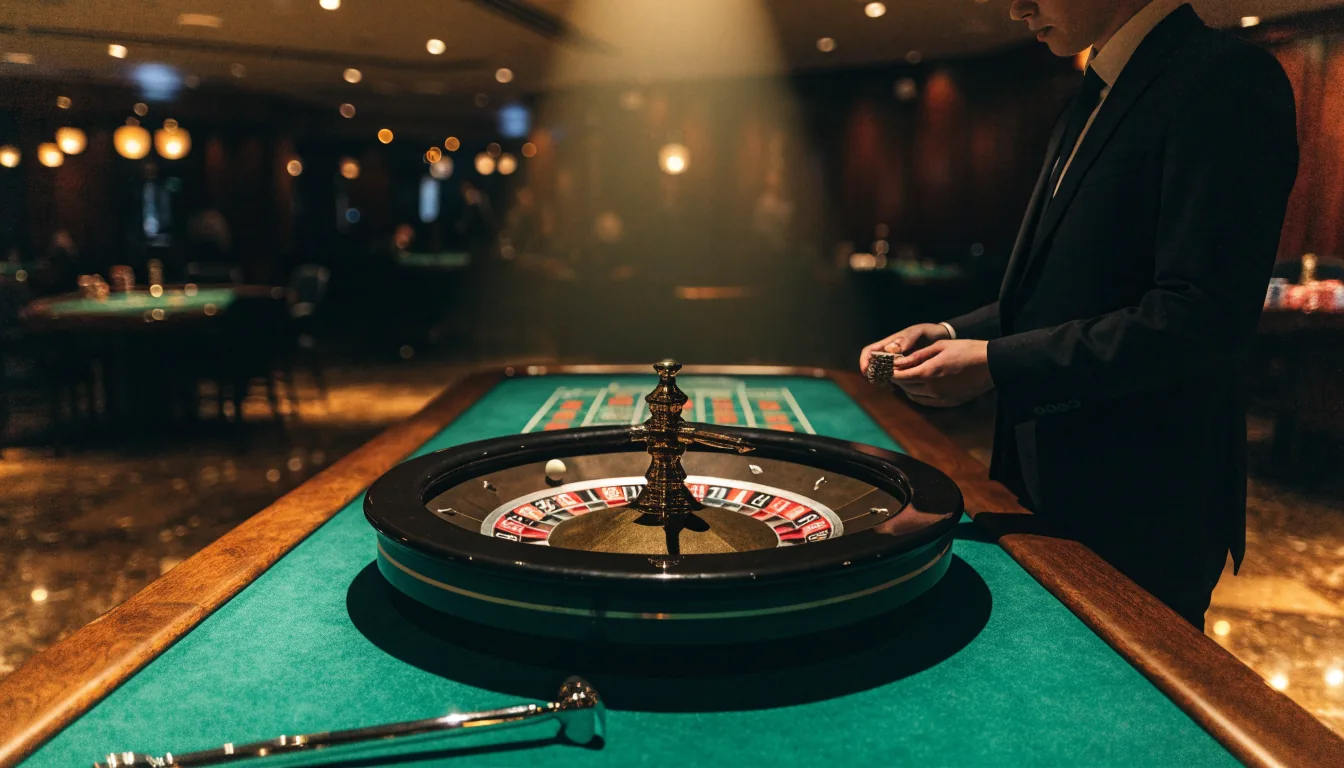
A practical look at operator licensing, English-speaking live tables, roulette variants, bonus conditions and the limits of free play.
The licence behind the live table
A roulette table may appear to belong to a casino’s website, but the legal question begins with the business behind it. For a service offered remotely to people in Great Britain, the operator must hold the relevant licence from the UK Gambling Commission. The location of the computers or other equipment that support the service does not remove that requirement. A company cannot make a British-facing casino service lawful simply by placing its technical operations elsewhere.
That principle matters when comparing roulette casinos because a familiar name, polished website or live broadcast is not what establishes a regulated service. The operator’s legal status does. In Great Britain, the UK Gambling Commission is the sole regulator for commercial gambling. Its remit includes online casinos, as well as other gambling activity within its authority. The licence is therefore not a decorative badge attached to the casino experience; it is the basis on which a business may offer regulated remote gambling to consumers in the market.
The distinction between the business and the people working within it is also part of the licensing structure. The Commission grants operating licences to businesses, while individuals involved in operating gambling businesses may need personal licences. These are different forms of authorisation with different subjects: one applies to the company providing the service, the other to relevant people in roles connected with its operation. A personal licence displayed somewhere on a site would not, by itself, establish that the company offering roulette is authorised.
Nor does a British-sounding brand settle the matter. A roulette casino UK players can access may present itself as local, use familiar language and accept customers from Great Britain, yet the relevant test remains whether the operator holds the appropriate Commission licence for the service it provides. The reverse is also true: the location of a company’s equipment is not a shortcut around regulation. The rule follows the remote service offered to consumers in Great Britain, not merely the physical address of a server.
Casino Games in the UK: Slots, Live Play and More
This reflects a particular view of responsibility. Remote gambling crosses borders with little ceremony: a customer may be in one place, a company registered elsewhere and the technology supporting the game in another. The regulatory approach does not treat that geography as an excuse for a gap in oversight. If an operator serves Great Britain consumers remotely, the licensing obligation applies. In that sense, the boundary is drawn around the market being served rather than around the machinery.
The legal framework is not identical across every part of the United Kingdom. The Gambling Act 2005 governs gambling in England, Wales and Scotland, but not Northern Ireland. The Commission’s stated role as the sole regulator for commercial gambling applies to Great Britain. That distinction is easy to blur in casual descriptions of “UK casinos”, where one label can make separate legal arrangements sound uniform. For someone assessing a service available in Great Britain, the relevant question is whether the operator is authorised for that market.
The word “licensed” can also obscure what the permission attaches to. It is the operator and the regulated activity that matter, not a general seal of approval for every feature, promotion or claim appearing on a site. A licence establishes that the business is operating within the Commission’s framework; it should not be read as a promise that every commercial decision will suit every customer. Regulation sets obligations and accountability. It does not turn gambling into a risk-free activity.
Before depositing, the licence number should be checked against the UK Gambling Commission’s public register. The number and the operator’s identity need to correspond; a logo or a sentence claiming regulation is not a substitute for that comparison. This is a narrow check, but an important one: the legal authorisation belongs to a particular business, and a similar trading name can make the connection less obvious than the website suggests.
Age is another part of the threshold for participation. Operators must verify a customer’s age before allowing funds to be deposited into a gambling account. That requirement places responsibility on the business, rather than leaving access to depend on a customer’s own declaration alone. It is one of the ways licensing reaches beyond the company’s paperwork and into the conditions under which a gambling account can be used.
Verifying Operator Status
- Find the operator’s licence number on the website
- Check the number against the UK Gambling Commission’s public register
- Confirm the operator’s identity corresponds with the registered business
- Verify the customer’s age before depositing funds
A regulated roulette service is therefore more than a game made available online. It is a remote commercial activity tied to an identifiable operator, a relevant authorisation and a regulator with jurisdiction over the market. The table may be presented as entertainment; the licence describes the obligations behind that presentation. Paperwork, in this case, is the point.
Gambling still carries the possibility of loss. Only gamble with money that can be afforded to lose.
Roulette online, with the table on screen
Online roulette can describe two different experiences. In one, a live dealer spins a physical wheel while cameras carry the table to a screen. In the other, software produces the wheel’s movement and result without a dealer or a filmed table. Both may sit under the same online-casino menu, but the resemblance ends at the familiar layout.
A live table is a broadcast with an interactive layer. The dealer, wheel and ball exist in a studio; the player sees them through a video feed and uses a separate interface to take part. That interface is not a view of the physical betting cloth. It is the digital part of the arrangement, showing the available positions and registering selections while the broadcast shows the round unfolding.
The distinction matters because the screen is doing two jobs. It carries a scene, with the dealer’s gestures and the wheel’s motion, and it provides controls for participation. A roulette casino online is therefore not necessarily showing a roulette game generated entirely by software. The word “online” identifies where the player encounters it, not how the outcome is made.
Mines Casino Game in the UK: Free Play and Risk
A digital roulette game without a live dealer works differently in appearance. The wheel and ball are animated, and the game runs through software rather than a continuous view of a person operating a physical table. It can reproduce the recognisable rhythm and visual language of roulette, but there is no dealer on camera and no studio scene to watch. The interface is the whole environment.
Neither format should be mistaken for a window into the other. A live stream is not simply an animation with a human face added, while a digital game is not a concealed recording of a real wheel. They present the same broad casino game through different means: one combines a filmed table with digital controls; the other is rendered as a software experience.
That difference shapes the pace of the screen. In a live game, the dealer’s actions provide visible transitions between one stage of a round and the next. The camera may remain on the table, or shift to a closer view, and the viewer follows the same physical scene as it develops. In a software game, movement and transitions are presented by the game itself. The visual world can be polished, but it does not have the incidental texture of a studio: a hand moving a marker, the sound of a wheel, or a dealer waiting for a broadcast cue.
Live Dealer Table
A broadcast of a physical wheel and dealer in a studio, combined with a digital interface for betting.
Digital Software Game
An animated experience where the wheel and results are generated entirely by software without a live feed.
The interface also changes what “watching” means. A video stream gives the table a human presence, yet participation still takes place through buttons, menus and on-screen positions. The player is not standing beside the wheel. The dealer cannot see a gesture across the room; the system must translate a digital selection into the game’s shared state. The physical and digital parts meet on the screen, but they remain distinct.
For someone comparing online casino roulette formats, the practical question is less whether one is more authentic than the other than what kind of experience is being sought. A live table places a human dealer and a real wheel at the centre of the image. A software game puts the interface and its generated presentation first. One can feel closer to a filmed casino table; the other is plainly a digital game. Those are descriptions of format, not promises about quality or outcomes.
The phrase “live” can also be misleading if it is read as a guarantee of conversation. A dealer may be visible and may speak, but the defining feature is the live table broadcast, not a personal exchange. A stream can make a game feel socially present without turning it into a private conversation. The camera is there for the table and the audience collectively. It is a public scene, even when viewed alone.
This explains why a live roulette lobby and a standard digital roulette lobby may look similar in a catalogue while leading to unlike screens. Before play begins, both can be represented by a thumbnail and a title. Once opened, one becomes a feed from a table, the other an animated game environment. The label is brief; the experience is not.
Live Dream Catcher Casino in the UK: Game Guide
The development of online casino formats has made roulette portable without making every version identical. A screen can carry the familiar wheel into a home, but the route it takes—camera and studio, or software and animation—changes the character of the encounter. The old theatre of the table remains visible in one format. In the other, it is reconstructed as an image.
Online roulette, then, is an umbrella term rather than a single technical arrangement. “Live” points to a dealer and a physical table delivered by video; digital roulette runs without that live scene. The difference is visible before any wager is placed, and it is worth keeping clear of questions about strategy or site choice. Whatever the format, roulette remains gambling, not a dependable way to make money. Only gamble what can be afforded to lose.
Recommended online casinos
- BeOnBetBonus: 100% up to €500 + 100 FS · Payout speed: 1-3 business days
- WinBeastBonus: €5000 + 500 FS + €650 Freebet · Payout speed: 1-3 business days
- BritsinoBonus: Welcome Package – Get your £2,200 + 2,000 FS · Payout speed: 1-3 business days
- AmunbetBonus: Join now and get 450% up to 2,700 GBP + 450 FS · Payout speed: 1-3 business days
- x3betBonus: Welcome Pack 100% Up to £1.000 + 200 Free Spins · Payout speed: 1-3 business days
- NightLuckBonus: Welcome Pack + 805% Up To 6400€ + 280 FS · Payout speed: 1-3 business days
Roulette casino sites and the question of trust
A roulette table can look polished while saying little about the business operating it. On a casino site, trust is less a matter of graphics or confident claims than of whether the operator can be identified and checked against an independent public record. The useful question is not which page looks most persuasive, but whether its details hold together.
Before depositing, find the operator’s licence number and check it on the UK Gambling Commission’s public register. Search the register itself rather than relying on a badge, a copied licence number or a statement in the site’s own terms. Compare the registered business with the operator named on the casino site. A brand and a company name may differ, so the relationship should be clear rather than left for customers to guess.
Do
- Search the Gambling Commission register directly
- Verify that the domain matches the registered operator
- Check for a clear internal complaints process
Don’t
- Rely on a logo or a sentence claiming regulation
- Infer legitimacy from a familiar-sounding brand
- Deposit funds if the operator connection is unclear
The domain matters too. A company’s presence on a register does not, by itself, establish that every site using a similar name belongs to it. Check that the site’s stated operator and domain correspond with the details shown in the register. If the number cannot be found, appears to belong to a different business, or the connection between the business and the site is unclear, that is a reason to pause before sending money.
This is a practical check, not an exercise in collecting reassuring symbols. A specialist review reports that the Gambling Commission’s public register, dated 26 September 2026, contained no entry for LuckyPays under that brand or its stated domain, including luckypays.io. That report is specific to the details it describes; it does not settle the status of unrelated businesses or similarly named sites. The lesson is to verify the operator and domain in question, not to infer legitimacy from a familiar-sounding name.
A credible roulette casino site should also make its basic operating arrangements legible. The terms should identify the business responsible for the account, and the customer-facing pages should explain how to raise a complaint. UK Gambling Commission licensees must provide an internal complaints process and access to an approved Alternative Dispute Resolution service. That does not guarantee a dispute will end in a particular way, but it gives the process a shape beyond an unanswered message.
Online casino without ID in the UK: what to know
The same scrutiny belongs at account creation. Operators must verify a customer’s age before allowing a deposit, and remote operators must prompt new customers to set a financial limit before their first deposit while providing account-level limit controls. Their presence is part of the regulated environment, not a promise that gambling is harmless. A roulette page may place the wheel centre stage; the operator’s responsibilities sit behind it.
Searches for the best live roulette sites can make trust sound like a matter of taste, as though a brighter interface or a longer menu were evidence. They are not. A site offering a live table still depends on the business behind the account being identifiable and properly authorised. Stream quality and table presentation cannot substitute for that check.
The quiet details count. A licence number that leads to the right operator, a domain that matches the account’s stated provider, and clear complaint routes are more useful than grand claims about reputation. If those details do not line up, there is no need to rush into a deposit to find out what happens next. Roulette is gambling, not a test of how much uncertainty a customer will tolerate. Only gamble what can be afforded to lose.
A live game, and the people around the wheel
Roulette has always had a social shape. Even when the wager is made privately, the game is imagined around a shared centre: the wheel, the dealer’s hand, the brief silence before the ball settles. A live casino brings that arrangement onto a screen. The dealer is not merely a voice attached to a game; they are the person whose actions give the round its visible rhythm.
Grosvenor first introduced its live casino games in the UK market in 2013, including Roulette, Blackjack, and Texas Hold’em.
That presence changes the feel of a casino roulette game without changing what roulette is. The wheel remains the focal point, and the dealer manages the table’s progression while players make their own decisions from elsewhere. There is a human being at the centre of the scene, though not necessarily a conversation between everyone taking part. The table can feel communal and solitary at once. Modern life is good at arranging both.
The appeal is partly theatrical. A dealer’s gestures, the wheel in motion and the small pause at the end of a round make the game legible as an event rather than an abstract sequence on a screen. The ceremony is modest, but ceremony has always helped casinos turn chance into something people can watch together. The players may be dispersed; the performance has a common address.
Live casino itself has a wider history than roulette. Card games and other casino games also moved into this setting, carrying familiar table rituals into online play. In the UK market, Grosvenor first introduced its live casino games in 2013. Its offering included Blackjack, Texas Hold’em and Roulette, placing the wheel alongside games whose social customs were already associated with a dealer and a table. It was not roulette alone that acquired a live presence. The whole casino floor, in miniature, was being reimagined.
That detail matters because “live” can sound like a technical label, when it also describes a particular relationship between game and audience. A dealer’s work is part of the experience; so is the player’s attention to the table, even from a distance. The arrangement borrows from the physical casino without reproducing its room, its noise or the feeling of being watched by other players. What remains is a performance with a narrow frame.
Online Casino American Roulette in the UK
The frame also has its limits. A live dealer does not make roulette more predictable, and a human presence should not be mistaken for a promise about outcomes. The dealer administers the game; chance remains the point. This is where the table’s polish can mislead: a composed voice and careful gestures may make uncertainty feel orderly. Orderly is not the same as controllable.
For some players, that human element is the reason to choose live roulette over a game presented without a dealer. For others, it is simply another way to encounter a familiar casino game. Neither response needs dressing up as a discovery. The enduring attraction lies in the contrast between a ritual that can be seen and an outcome that cannot be arranged.
A live table is entertainment, not a source of income. Anyone who chooses to gamble should wager only what they can afford to lose.
What “best” can mean without a league table
A “best roulette casino” sounds like a title waiting to be awarded. In practice, it depends on what is being judged: whether the table suits a player’s preferences, whether its presentation is easy to follow, or whether the operator is entitled to offer gambling in Great Britain. Those are different questions, and a confident ranking can blur them into one.
A list of casinos cannot establish a winner without a clear, verifiable basis for comparison. A polished site may be pleasant to use; that does not make it the best casino for roulette in any universal sense. Nor does a prominent table, a familiar name or an emphatic claim about “best odds” settle the matter. Such language is a sales description, not a measure that turns a preference into proof.
The more consequential distinction is legal rather than decorative. The Gambling Commission requires remote operators serving consumers in Great Britain to hold the relevant licence. That establishes whether an operator is authorised to offer its service in this market. It does not rank licensed casinos by entertainment, interface or roulette selection. A licence is a threshold, not a trophy.
Attention: A gambling licence is a regulatory threshold that establishes an operator’s authorisation; it is not a trophy or a guarantee of a casino’s quality.
This matters when “best live roulette casino” is treated as if it were a simple category. One player may care about how clearly a table is presented; another may place more weight on the dealer’s language or the way the site works on a particular device. Those preferences can guide an individual choice, but they do not produce an objective league table. Without comparable evidence, a numbered ranking would only make uncertainty look official.
Searches for a roulette strategy casino, casino roulette strategy or a site with the best odds often combine separate concerns. The casino is the operator; the game is roulette; and a strategy is a player’s approach to wagering. None of those labels turns a site into a source of certainty about the next result. A casino’s “maximum bet” label, where one is displayed, is also a condition to understand rather than evidence that the venue is better. The same goes for table numbers: more choices do not, by themselves, mean a better experience.
For a UK roulette player, “best” is therefore most useful as a personal shortlist, not a public verdict. The shortlist can begin with the basic question of whether the operator is licensed for the British market, then consider the qualities that genuinely matter to the person choosing. That is less dramatic than a podium. It is also more meaningful.
Online European Roulette Casinos in the UK
Roulette remains gambling, not a way to turn a ranking into an advantage. Only wager what can be afforded to lose.
Playing roulette without mistaking it for a slot
Roulette and an online slot may sit beside each other in a casino lobby, but they are different games, and the rules governing one should not be casually transferred to the other. A slot is built around a game cycle that produces its own result. Roulette centres on a wheel and a wager placed against its possible outcome. In a live casino, that wheel may be shown at a streamed table; in a digital version, the game is presented without a live dealer. Neither format turns roulette into a slot.
That distinction matters when considering stake rules. A specialist review of Great Britain gambling rules reports that the online slot cap is £5 per game cycle for adults aged 25 and over, and £2 for those aged 18 to 24. The same kind of review notes that these slot limits do not cover roulette or blackjack. The figures therefore describe slot play, not a general ceiling for every casino game. A category label matters.
Slot Stake Limits in Great Britain
For adults aged 25 and over, the online slot cap is £5 per game cycle, and £2 for those aged 18 to 24. These specific limits do not apply to roulette or blackjack.
For someone deciding how to play roulette in a casino, the practical starting point is the game’s own table information: it sets out the available wagers and the terms attached to that table. A live roulette table adds a dealer and a visible wheel; a digital roulette game does not require either to be physically present. The choice between them is about the kind of presentation, not about a slot-style game cycle. Specific table terms still deserve attention before any wager is made.
Free-play roulette can offer a way to become familiar with the layout and the language of a table without staking money. It is not evidence of how real-money play will feel, nor does a free version make a casino more trustworthy. A later move to a live table brings its own interface, pace and conditions. The distinction is simple; the consequences are not.
The rules for slots also include restrictions on autoplay and how quickly one game cycle can follow another. Those are slot-specific controls, rather than a template for roulette. Treating every game in a casino as though it were a slot obscures both the regulation and the experience.
Age checks form part of real-money gambling: operators must verify a customer’s age before allowing a deposit. Roulette is not exempt from that responsibility simply because its stake rules differ from those for slots. Gambling should remain within what can be afforded to lose. A wheel is not a safety net.
Live Baccarat Online Casinos in the UK: What to Know
A roulette bonus is still an offer with conditions
A roulette casino bonus can look like extra playing funds, but its headline does not explain what those funds can be used for or when they become withdrawable. A welcome bonus, a deposit promotion and a no-deposit offer are different arrangements, not interchangeable labels. Each has its own terms, and the detail matters more than the name.
For roulette, the first point to check is whether the promotion applies to the game at all. Some casino offers exclude live tables or treat roulette wagers differently from other games. A live casino bonus may therefore be available only on selected games, or roulette may count towards its conditions in a particular way. The same caution applies to a Lightning Roulette promotion: the game’s name in an offer does not, by itself, explain how qualifying play is assessed.
Other terms can affect whether an apparent bonus has practical value. The rules may set out a qualifying deposit, eligible games, wagering conditions, a time limit or restrictions on withdrawing funds. Those details should be read together. A promotion that permits roulette play may still attach conditions to the bonus balance or to any winnings associated with it. The offer is not simply cash with a decorative label.
A no-deposit bonus can sound especially uncomplicated because it does not begin with a payment. Yet the absence of an initial deposit does not remove the offer’s rules. Eligibility, permitted use and withdrawal conditions still determine what the promotion means in practice. Where those terms are unclear, the promise is clearer than the arrangement.
Attention: Promotional language is designed to attract attention, but the less conspicuous terms and conditions define the actual value of the offer.
The useful comparison is not between the largest headline and the smallest one. It is between what the promotion appears to offer and what its full conditions allow. If those conditions cannot be understood before opting in, there is little reason to treat the bonus as value. Promotional language is designed to attract attention; the less conspicuous terms define the offer.
A bonus should never be a reason to wager money that cannot be comfortably lost. Roulette remains gambling, whether the stake comes from a deposit or from promotional funds. Only money that can be afforded to lose should be used. The distinction is plain; the small print is not.
Free roulette and the limits of the word “free”
A free roulette table can offer a way to see how the game is presented without staking money. The word describes the play mode, not a promise that every part of the experience is costless or that the table tells the whole story. A practice balance is not withdrawable cash, and results there do not establish what real-money play will feel like.
That distinction matters when a site offers both French roulette and other roulette formats. A label identifies a version, but it does not by itself explain every rule attached to a particular table. The same is true of a named variant such as Fireball Roulette: a free-play option may help show its presentation, but the label alone is no measure of its value or of the operator behind it. The table’s own information is where its rules and conditions belong.
Online casino tournaments in the UK: rules and checks
Nor does a free game establish a casino’s quality. It cannot demonstrate how an operator handles deposits, withdrawals, account controls or customer complaints. Those are separate matters from the play mode, and a polished practice table is not evidence of sound service. Free play is a small window, not an inspection.
The phrase “roulette edge” also needs care. In ordinary casino language, the house edge refers to the mathematical advantage built into a game’s rules; it is not a prediction of what will happen in an individual session. A practice balance cannot make that advantage disappear, and a short run of results cannot measure it reliably. No special pattern in free play turns into a dependable route to winnings.
Rules about online slot stakes are another separate subject. A specialist review states that Great Britain’s slot stake limits do not apply to roulette or blackjack; that statement concerns those limits, not a guarantee that roulette is risk-free or unrestricted in every other respect. Roulette is not a slot simply because both games appear on the same casino site.
“Free” is therefore useful in a narrow sense: it can mean encountering roulette without wagering cash in that mode. It says nothing decisive about real-money terms, the casino’s standing or future results. Any move from practice play to gambling with money changes the stakes in a literal sense. Only money that can be afforded to lose should be gambled.
Gambling Risk
Roulette is a game of chance with no guaranteed way to win; only gamble with money that can be afforded to lose.
Roulette has no guaranteed way to win
The promise of a sure route through roulette is older than the latest system bearing a confident name. A sequence of wagers can be arranged on paper to look orderly: increase after a loss, repeat a pattern, or divide a stake across outcomes. None of these arrangements can make the next result obey the previous one. A wheel has no memory, and a digital display does not acquire one on behalf of the player.
That is the plain answer to how to win at roulette in a casino: no method can secure a win every time. A strategy may change the size and timing of wagers, and therefore the way a session feels, but it cannot turn uncertainty into certainty. A run of favourable results is possible; so is a run that goes the other way. Neither proves that a system has found a hidden rhythm.
This matters because the language of “the best way” often blurs two different aims. One is deciding how to wager; the other is controlling the result. The first is a personal choice. The second is not available. Roulette offers outcomes, not a negotiation with the wheel. The same distinction applies to electronic roulette: a screen may alter the presentation, but a chosen pattern is not a promise of success.
Claims that a method can guarantee profit, recover every loss or beat roulette on demand deserve particular caution. Certainty is an appealing product, especially when chance has just been unkind. But a system’s tidy rules do not make its outcomes tidy. Chasing losses can turn a wager into an attempt to repair the past, when the next result remains uncertain.
A sensible limit is therefore more useful than a winning formula. Gambling should be confined to money that can be afforded to lose; money needed for essentials does not belong at the table. Stopping is not a strategy for winning. It is a way to keep uncertainty from making decisions on someone else’s behalf.
No secret door.
Lightning Roulette and the live-variant question
Lightning Roulette is a named live roulette variant, not a separate category of casino licence or a promise about what a session will deliver. Its name may suggest spectacle, but a title alone says little about the rules, the presentation or the terms attached to a particular table. Those details belong to the game information shown by the operator.
That distinction matters when a casino offers both standard roulette and a branded live version. The variant can be considered on its own, without treating it as a different kind of gambling altogether. A casino’s label does not establish that its version has identical features to another table carrying the same name; the displayed rules remain the useful point of reference.
Searches for Lightning Roulette in a UK live casino often blur several questions together: whether the game is available, whether it is live, and whether it is a slot. The name belongs to roulette, not to the slots category. Calling it “Lightning Roulette slots” does not change the game’s classification. Nor does the word “live” settle questions about a particular operator’s offering.
Some tables may also be presented from a first-person viewpoint. That describes a way of viewing the game, not evidence of better chances or a different outcome. Casino scores and promotional descriptions are similarly poor substitutes for the rules displayed at the table. The spectacle is packaging; the terms still matter.
In Great Britain, remote gambling operators serving consumers must hold the relevant Gambling Commission licence, regardless of where their equipment is located. That legal status concerns the operator, while the table’s own information explains the variant. Two separate questions. Roulette remains a game of chance, and no presentation makes a winning result certain. Only money affordable to lose should be put at risk.
Are online casino games licensed and regulated?
Yes. Operators offering remote gambling to consumers in Great Britain must hold the relevant UK Gambling Commission licence.
What are the online slot stake limits in Great Britain?
The limit is £5 per game cycle for adults aged 25 and over, and £2 for adults aged 18 to 24. These limits do not apply to roulette or blackjack.
Is LuckyPays licensed by the UK Gambling Commission?
The Commission’s public register dated 26 September 2026 does not list LuckyPays or its stated domain, luckypays.io.