
Non-GamStop European Casinos: UK Rules Explained
 Available in GB
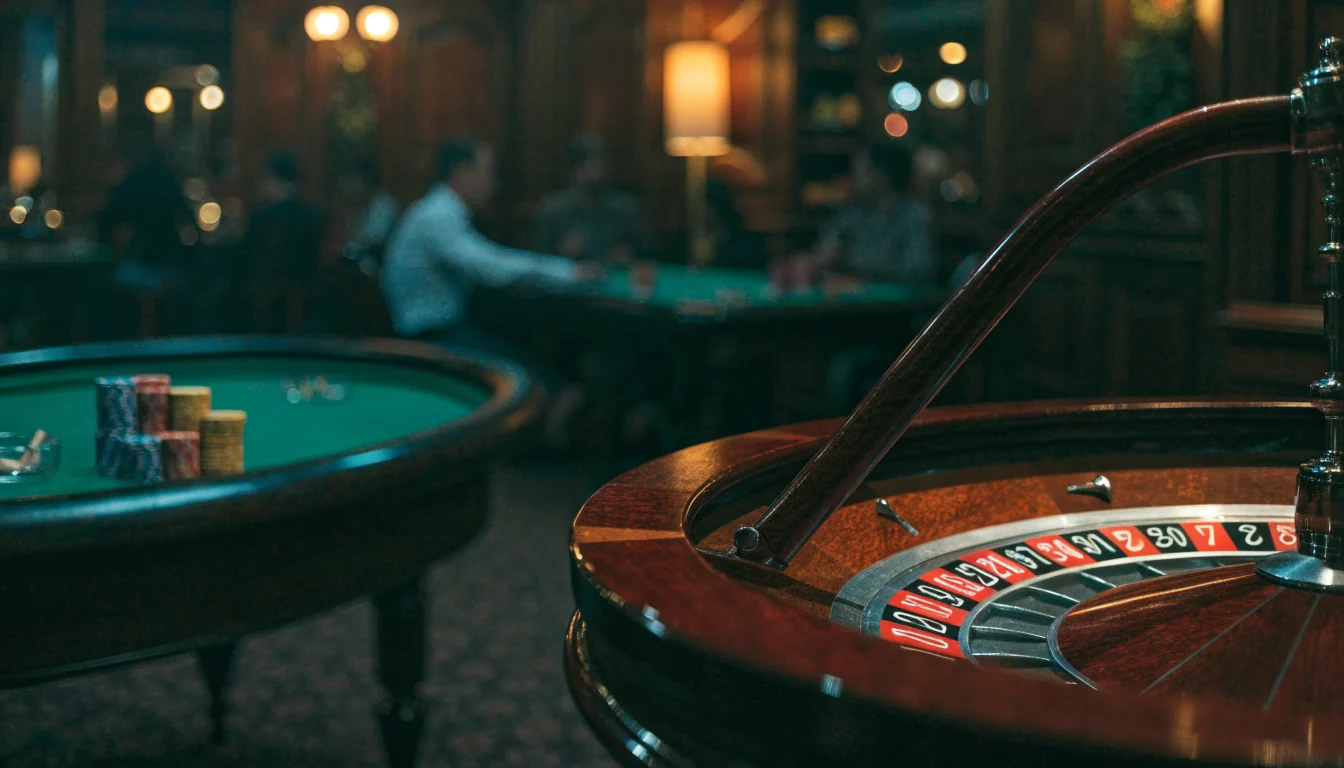
The label describes a casino’s relationship with a self-exclusion scheme; it does not confirm that the site is authorised to serve Great Britain.
What “Not on GamStop” Means in the UK
“Not on GamStop” describes a relationship with a self-exclusion scheme, not a dependable category of casino. GAMSTOP is Great Britain’s national online self-exclusion service. A person who registers is prevented from using existing gambling accounts or opening new ones with online operators covered by the scheme. Registration is free.
The boundary matters because participation is compulsory for online operators licensed by the Gambling Commission. The regulator required online operators to join GAMSTOP from 31 March 2020. For a player who has chosen self-exclusion, the scheme is intended to apply across those participating licensed gambling businesses, rather than only at the particular website where the decision to stop was first made.
The rule belongs to a wider British approach to remote gambling. Operators taking bets from consumers in Great Britain must hold the relevant Gambling Commission licence, even when the business itself is based abroad. So a European address, a European-sounding name or the word “European” in a description does not settle whether an online casino is authorised to serve this market. Geography and regulatory status are different questions.
Non-UK-Registered Casinos: Regulation Explained
That distinction is often flattened in the phrase “European casinos not on GamStop”. It can sound as though the phrase identifies a coherent group of European online casinos, perhaps offering a route around a British restriction. It does not. “Not on GamStop” says only that a site is outside the scheme’s coverage; it does not establish where the business is based, whether it accepts customers in Britain, or whether it holds the licence required to serve them legally.
Nor does the label turn an unlicensed site into a lawful alternative. Online gambling in Britain is legal through operators holding a current UK Gambling Commission licence. A business operating outside that system does not acquire British authorisation simply because it is described as European. This is a regulatory distinction, not a point of style.
There is a human reason the distinction deserves care. Self-exclusion is not a technical inconvenience to be routed around; it is a formal choice to stop gambling with covered businesses. Looking for a non-GamStop European casino while an exclusion is active could conflict with the terms of that decision. Opening another account elsewhere is not a sound way to work around an exclusion. The useful response to temptation is to extend exclusion to every place where gambling might become an option, rather than to search for a gap.
Non-GamStop Curaçao Casino Sites: What to Check
The policy reflects a judgement about responsibility. A person may make a decision to exclude themselves at a moment of resolve, while the urge to gamble can return later. A multi-operator scheme makes that choice broader than a request made to one company alone. It also places a duty on the regulated industry: gambling businesses must offer self-exclusion by law, and participation in the national online scheme is part of the framework imposed on licensed operators. This is more than a badge on a website. It is an attempt to make a private decision function across a market.
The year in the phrase “non GamStop European casinos 2026” does not change that principle. A date in a heading cannot establish that a particular European casino is available to British players, is licensed here, or falls outside a person’s obligations. Such claims depend on the operator’s actual status, not on broad regional language. No general label can replace that distinction.
The term can therefore be read narrowly: it refers to online gambling businesses that are not covered by GAMSTOP. It should not be read as proof of safety, legality, suitability or permission to gamble during an existing self-exclusion. For people who have chosen the scheme, its purpose is to prevent access across the participating licensed online market. The border in the phrase is not a loophole in the rule.
European Online Roulette and the Limits of the Label
“European” can describe several different things in the context of an online casino. It may suggest that a business is based somewhere in Europe, that its intended audience is European, or simply that a page uses a familiar regional label. Those meanings are not interchangeable. A phrase such as “European casino online” does not, by itself, identify who operates a site, which rules apply to it, or whether it may lawfully serve customers in Britain.
A phrase such as “European casino online” does not identify who operates a site, which rules apply to it, or whether it may lawfully serve customers in Britain.
Roulette adds another layer of ambiguity. The word can point to a particular table game, to a roulette-focused section of a wider casino, or merely to the kind of entertainment a person hopes to find. It says nothing reliable about a specific wheel, game format or provider. Nor does the continental adjective establish that the game follows a distinct set of rules. A label can be suggestive without being precise.
That distinction matters because online casino descriptions often compress separate questions into one appealing phrase: where a company is based, which customers it seeks, what games it offers and what jurisdiction regulates its activity. “European online casino” may appear to answer all of them, but it answers none on its own. A location claim is not proof of a licence; a roulette reference is not proof that a particular roulette product is available.
For customers in Great Britain, the legal question is not settled by a European identity. An operator offering remote gambling to people in the British market must hold the relevant UK Gambling Commission licence, regardless of where the business is located. A foreign address or European branding cannot stand in for that authorisation. This is a practical boundary, not a comment on whether a company’s presentation sounds convincing.
The word “best” introduces a different problem. A list presented as the best European casino sites implies that the entries have been identified and assessed against some defensible standard. Without substantiated details about individual operators and their products, such a ranking would be decoration masquerading as guidance. The same applies to a list of new European casino sites: “new” is a time-sensitive claim, and the regional label does not establish when a business began operating or whether it is suitable for the British market.
Trusted Casinos Not on GamStop UK: Risks and Checks
This does not make the wording useless. It can describe what someone has in mind: an online casino with a European association, perhaps one where roulette is prominent. But that is a description of an interest, not a dependable category of operators. Two sites using similar language might have different ownership, licensing arrangements and offerings. The shared label should not be mistaken for a shared standard.
There is also a difference between a casino’s location and the rules governing a customer’s experience. A business may be situated outside Britain yet still need a UK licence if it offers remote gambling to people here. Conversely, the word “European” does not demonstrate that a site has permission to serve British customers. For the same reason, a casino’s own description of its market should not be treated as a regulatory finding.
Roulette terminology can be equally loose. A page might use “European roulette” to distinguish a game format, while a broader casino description might use “European” to suggest geography or style. Those are separate uses of the same adjective. Without the details of a named game, it would be unsafe to infer its rules or mechanics from the wording alone. The label does not reliably tell whether the reference is to the game or the operator.
The British self-exclusion framework provides one narrow point of clarity amid this broad vocabulary. GAMSTOP works across participating licensed gambling websites and apps, rather than being confined to a single online operator. That fact does not validate a European label or identify a roulette offering; it describes the reach of a particular exclusion arrangement within its participating network.
Attention A regional label or a roulette interest does not prove a site’s location, its product range, its licence, or its standing.
A useful reading of the phrase, then, is modest. It signals a regional association and perhaps a roulette interest, but it does not prove a site’s location, its product range, its licence or its standing. Those claims belong to separate questions and require separate evidence. Treating one attractive label as an answer to all of them is how a vague category acquires an undeserved air of certainty.
The phrase can point toward a subject. It cannot certify a casino.
European Roulette Without a Made-Up Casino Shortlist
A casino offering European roulette is a more specific proposition than a site described loosely as European. The phrase points towards a particular table game, while a request for the best place to play adds a judgement about the operator behind it. Those are separate claims. A roulette table cannot establish that the casino is suitable for British customers, and a polished ranking cannot make that connection true.
“Best” also changes with the measure being used. One person may mean a clear set of rules; another may care about the way a table is presented or the range of account features. A premium or VIP label adds atmosphere, not proof of quality. Without a stated, relevant basis for comparison, a top-ranked casino is not a finding so much as an adjective wearing a numbered badge.
For British players, there is a more consequential distinction than the styling of a roulette table. Remote gambling operators that serve the British market must hold a UK Gambling Commission licence, wherever the business is based. A European address or a European-sounding name does not replace that requirement. Offshore casinos operate outside the UKGC system; describing them as European does not make them licensed to serve people in Britain.
Non-Gamban Casinos in the UK: What the Label Means
That matters because a casino page can present a game as though it were the whole subject. It is not. Roulette is one part of a gambling business, and the operator’s status determines the regulatory framework around its offer. In Britain, online gambling is legal at sites holding the appropriate UK licence. The table’s appearance, name or supposed prestige cannot answer the licensing question.
A “European roulette casino” may therefore be used to describe a venue by its game, but it should not be read as a reliable status label. Nor does “European roulette” by itself identify a particular table, supplier or set of rules. A name on a page can sound precise while leaving the important practical questions unanswered. Precision in wording is not the same thing as evidence.
The same caution applies to claims about a European roulette table being exclusive, premium or reserved for VIP customers. These descriptions can be part of a casino’s presentation, but they do not establish that a British player can lawfully use the site, or that the table is available under the terms implied. The distinction is ordinary but easily blurred: a game feature describes an offer; a licence describes the operator’s standing in the market.
There is no sound reason to turn that uncertainty into a catalogue of supposed favourites. A list can look useful simply because it is orderly. That is not enough.
Self-Exclusion Breach
Seeking a European roulette site to bypass an active exclusion can conflict with the terms of that decision and is not a sound way to work around a formal restriction.
The word “online” changes the setting, not the standard of care. A roulette game shown on a screen is still part of an account with a gambling business. The table may look detached from the company that runs it, but the player’s participation is not. British regulation attaches to the operator serving the market, not to the decorative language surrounding a game.
Self-exclusion makes that boundary personal as well as regulatory. It is a formal agreement not to gamble, and the person who enters it remains responsible for keeping to it. Seeking a European roulette site elsewhere is not a safe workaround: playing at a non GamStop casino could breach the terms of an existing self-exclusion. Opening another account to get around an exclusion is not an appropriate response.
This is why a “best online European roulette casino” cannot responsibly be reduced to the table alone. A recommendation that ignores the operator’s status may direct attention towards the least important part of the decision. Roulette has its own visual language—wheel, pockets, table, a small theatre of chance—but the surrounding business is not scenery. The rules of the market sit beyond the felt.
A careful description can say what the phrase suggests: an online casino associated with European roulette. It cannot turn that association into a verified endorsement, a promise of access, or a ranking. The more confidently a label claims to settle those matters, the more important it is to separate presentation from substance. The wheel is only one part.
Deposits, Accounts and the Self-Exclusion Boundary
A search for a European casino not on GamStop can sound like a question about geography. In practice, the important boundary is the self-exclusion agreement already in place. Opening another account elsewhere is not a way to make that agreement disappear. If gambling at a non-GamStop casino conflicts with its terms, doing so could breach the commitment made when self-exclusion was accepted.
The language of casino advertising can make this boundary seem less definite than it is. “European” describes a broad location or market identity, not a permission to serve British customers. Remote gambling operators offering services to people in Great Britain must hold a UK Gambling Commission licence. A label such as “new European online casino” does not alter that requirement, nor does it establish how an operator handles a person who has excluded themselves elsewhere.
Self-exclusion is a formal agreement between a person and a gambling business. It is not a preference setting that can be sidestepped by creating another login, and it is not a deposit condition. Gambling businesses are required to offer self-exclusion, and once they accept an agreement, they have duties of their own. The account must be closed, any funds left in it returned, and the customer’s details removed from marketing databases. The business must also take reasonable steps to prevent that person from gambling with it.
That division of responsibility matters. The operator cannot treat the agreement as a request to send fewer offers while leaving the account available. Nor does the existence of a separate site make the original agreement less serious. A person who has self-excluded should not open another account elsewhere to get around the restriction; the safer boundary is to exclude themselves from all places where they may be tempted to gamble.
Do
- Use responsible-gambling tools
- Request self-exclusion from the operator
- Exclude yourself from all tempting venues
Don’t
- Open new accounts to bypass restrictions
- Treat self-exclusion as a preference setting
- Use non-GamStop sites to route around exclusion
This is why terms such as “European casino sites not on GamStop” or “European casino no deposit bonus” should not be read as assurances about access or suitability. A promotional phrase cannot cancel an existing exclusion, and a new account cannot turn a self-exclusion into an ordinary account choice. The same applies to searches for European slots online: the game category does not change the agreement’s purpose.
For an individual online gambling account, self-exclusion can be requested through the operator’s responsible-gambling information or customer services. Once accepted, the operator’s obligations concern that account and its own marketing records. A separate account elsewhere is a different relationship, but seeking it out to continue gambling may undermine the very protection self-exclusion is meant to provide.
There is also a limit to what an exclusion can do after the event. The Gambling Commission regulates operators; it does not provide refunds for money spent gambling. An exclusion is a preventative measure, not a route to recover losses. Where a person has chosen to stop, the boundary should include every setting in which gambling could become tempting—not merely the account that first prompted the decision.
A casino’s location, name or promotion cannot rewrite a self-exclusion agreement. The account closes. The commitment remains.
European Casino Sites and Slot Rules in Britain
“European” can describe a casino’s location, branding or intended audience, but it does not establish that the site may legally serve customers in Britain. Remote operators offering real-money gambling to people in Great Britain need a UK Gambling Commission licence, wherever the business itself is based. A foreign address is not a substitute for that permission.
That distinction matters when casino sites, slot games and bonuses are discussed together. A description of a site is not an endorsement, and a list presented as the “best” would imply that its operators and products had been checked against relevant standards. Promotional language is plentiful; reliable particulars are another matter.
Britain’s rules also shape what licensed online slots can offer. Autoplay is prohibited, and each online slot spin must last at least two and a half seconds. The maximum stake per game cycle is £5 for adults aged 25 and over, and £2 for customers aged 18 to 24. These are rules for the British market, not qualities that can be inferred from a European label.
Before a customer can deposit money into a gambling account, the operator must verify their age. UK-licensed casinos must also provide responsible-gambling tools, including self-exclusion. These requirements are part of the framework within which legal online gambling operates, rather than optional features attached to a particular game.
For people who have chosen to exclude themselves, the boundary is especially important. GAMSTOP connects participating licensed gambling websites and apps in a shared exclusion arrangement, rather than treating each one as an unrelated decision. A person with an active exclusion should not open an account elsewhere to get around it: gambling at a non-GamStop casino could breach the terms of that self-exclusion. The safer course is to exclude themselves from every place where they may be tempted to gamble.
UK Slot Regulations
In the British market, autoplay is prohibited, spins must last at least 2.5 seconds, and maximum stakes are capped at £5 for adults 25+ and £2 for those aged 18-24.
The arrangement reflects a broader principle: an exclusion is meant to interrupt access, not merely to decorate an account page. Gambling businesses must offer self-exclusion by law, and businesses accepting an agreement must take reasonable steps to prevent the excluded customer from gambling with them. A European label cannot erase that boundary.
Recommended online casinos
- BeOnBetBonus: 100% up to €500 + 100 FS · Payout speed: 1-3 business days
- WinBeastBonus: €5000 + 500 FS + €650 Freebet · Payout speed: 1-3 business days
- BritsinoBonus: Welcome Package – Get your £2,200 + 2,000 FS · Payout speed: 1-3 business days
- AmunbetBonus: Join now and get 450% up to 2,700 GBP + 450 FS · Payout speed: 1-3 business days
- x3betBonus: Welcome Pack 100% Up to £1.000 + 200 Free Spins · Payout speed: 1-3 business days
- NightLuckBonus: Welcome Pack + 805% Up To 6400€ + 280 FS · Payout speed: 1-3 business days
What UK Players Should Know About GAMSTOP Coverage
For people in Britain, the practical reach of GAMSTOP is broader than a single casino account. Registering with the scheme blocks access to gambling accounts with UK Gambling Commission-licensed online operators, across participating websites and apps. It is designed as a multi-operator exclusion, so it does not depend on remembering each brand separately.
The scheme became compulsory for UK-licensed online operators in 2020. A regulated casino serving the British market must therefore take steps to prevent a person who has excluded themselves through GAMSTOP from gambling there. This is part of a wider legal duty: gambling businesses must offer self-exclusion, not treat it as a courtesy available only when requested.
A GAMSTOP registration applies for a fixed period. The available periods include six months, one year or five years. During that time, the exclusion is meant to create a boundary across the UK-licensed online market, rather than merely close one account while leaving the rest untouched. A dryly practical arrangement.
The phrase “European casinos for UK players” can blur an important distinction. A site’s European location or branding does not establish that it holds a UK operating licence, nor does it show that it is covered by GAMSTOP. Remote operators selling gambling to customers in Great Britain must hold the relevant Gambling Commission licence. A non-GamStop casino may sit outside the scheme, but that does not make it an appropriate way around an existing exclusion.
Opening an account elsewhere to bypass GAMSTOP is not a safe workaround. Gambling at a non-GamStop casino could conflict with the terms of a self-exclusion agreement, even if the site is not part of the scheme. The more protective boundary is to exclude from every place where gambling might become tempting, rather than treating the limits of one system as an invitation to look for another door.
GAMSTOP’s reach concerns participating UK-licensed online gambling platforms; it should not be mistaken for a universal block on every gambling setting or every site worldwide. The distinction matters for anyone comparing an online casino’s claimed location with the protections that apply in Britain. A foreign label cannot substitute for a UK licence, and a list of casinos described as suitable for British players cannot establish that claim by itself.
Self-exclusion is a formal safeguard, not a device for recovering money already spent. The Gambling Commission cannot refund gambling losses. Where an exclusion is in place, the central purpose is prevention: keeping access to covered accounts closed for the chosen period.
No-Deposit Bonuses and the Self-Exclusion Question
A casino promotion can be framed as money offered before a deposit, but its label does not change the boundary created by self-exclusion. The arrangement is not a preference that can be set aside when an attractive offer appears. It is a formal request for a gambling business to refuse the person access to its service for an agreed period.
That distinction matters when European casinos are described as offering a free bonus with no deposit. The wording can make the offer sound detached from ordinary account rules, as though a promotion occupies a little space outside gambling itself. It does not. If a person has excluded themselves from a venue or website, that venue or website must refuse them service. A bonus does not make the exclusion disappear.
Self-exclusion applies to a particular gambling company or venue, or across the sites covered by a multi-operator scheme. Its purpose is to interrupt access, not to create a special category of play without the usual stakes. A no-deposit offer remains part of the gambling service being promoted, even if no payment is required at the outset.
The broader market language can blur important differences. “European casino” may describe a location, a brand’s identity or simply a style of promotion; it does not establish which rules apply to a person in Britain. Nor does an offer’s wording say whether an excluded customer would be permitted to use it. What matters for self-exclusion is the business or site named in the agreement, and the refusal of service that follows.
The duration is part of the agreement too. Self-exclusion is set for a chosen period, with the stated range running from six months to five years. During that time, the excluded customer is to be turned away by the venues and websites they named. The arrangement is plain in purpose, even when advertising makes every offer sound like an exception.
A search for the best European online casino bonus without a deposit can therefore collide with a more basic question: whether gambling access has already been formally excluded. Where it has, pursuing a promotion elsewhere to get around that boundary is not a harmless change of offer. It risks contradicting the commitment the person made. The promotion is incidental. The agreement is not.
How to Assess Casino Claims Without a “Best” List
A polished ranking can make a collection of casino names look like a considered recommendation. Yet a European label says little by itself about whether an operator is authorised to serve people in Britain, and a list is not evidence that its entries have been checked. No particular operator, slot or roulette product can be responsibly singled out here as the best. A confident order of names would add theatre, not useful information.
For people in Britain, the legal distinction matters more than the geography in a site’s branding. Remote gambling operators serving the British market must hold a UK Gambling Commission licence. A foreign location or European-sounding description does not replace that requirement. Nor does a recommendation establish that a site is suitable for someone who has excluded themselves from gambling.
Self-exclusion is more practical than a ranking: it concerns a specific gambling business and account. Gambling businesses must make self-exclusion available, and a player can ask one business to exclude them. On an individual website or app, the instructions are generally found under its Responsible Gambling or Safer Gambling information; customer services can be contacted if they are not. The point is not to find a different account after exclusion. Opening another account elsewhere to get around it is not a safe workaround, and gambling at a non-GamStop casino could breach the terms of an existing self-exclusion.
Main Conclusions
- A European label is not proof of a UK Gambling Commission licence.
- Self-exclusion is a formal commitment that should not be bypassed by opening new accounts.
- GAMSTOP provides a multi-operator boundary across participating licensed websites.
- Rankings and “best” lists are not evidence of regulatory suitability or safety.
That boundary is easily blurred by lists that treat access as the only measure of quality. A person who has excluded themselves should consider every place where they may be tempted to gamble, rather than treating a change of brand as a fresh start. Exclusion is a formal commitment, not a comparison feature.
A useful assessment therefore begins with what a claim can actually establish: whether the operator is licensed to serve the British market, and what self-exclusion route it provides. It cannot promise that a casino is “best” for every person. If gambling has caused harm, the regulator cannot refund money already spent; a ranking cannot undo it either.
Crypto Casinos, Roulette Searches and Responsible Boundaries
Interest in a European casino that combines roulette with cryptocurrency payments can make the casino’s location seem like the decisive detail. For someone who has self-excluded, the more important question is whether gambling elsewhere would conflict with that agreement. A different currency or a European label does not erase the commitment.
Self-exclusion is a formal agreement not to gamble, and responsibility for observing it rests with the person who entered it. A UK player who has excluded themselves should not open an account at a non-GamStop casino to get around the restriction. Gambling there could breach the terms of the exclusion, even if the site describes itself as European or accepts crypto.
For gambling businesses serving customers in Great Britain, a foreign location does not remove the UK licensing requirement. The UK Gambling Commission requires remote operators serving the market to hold its licence. That legal distinction does not establish that any particular cryptocurrency casino accepts UK players, or that it is appropriate for them.
The boundary also extends beyond a single website. Online self-exclusion can be arranged through GamStop or by contacting an individual casino. Exclusion is most meaningful when it covers all the places where a person may be tempted to gamble, rather than being treated as a technical obstacle to route around. The label on a site cannot settle that personal obligation.
This is not a way to recover money already spent. The regulator cannot provide refunds for gambling losses. Where gambling has become difficult to control, support and exclusion are more relevant than a new payment method or roulette table. The machinery may change; the agreement does not.
Casino Games and What Self-Exclusion Actually Does
A casino game is only one part of the boundary created by self-exclusion. The agreement applies to the venues or online sites identified when a person registers; it is not a general switch that makes every form of gambling inaccessible. A self-excluded customer should be refused service by the businesses included in that agreement.
Registration involves identifying the places to be excluded, providing personal details so identity can be confirmed, choosing a duration and receiving confirmation. Those steps give the agreement a practical scope: the named venue or website is expected to keep the person from gambling there. In Britain, gambling businesses must offer self-exclusion by law, and they must take reasonable steps to prevent excluded customers from gambling with them.
That boundary matters when interest in European casino games, including roulette, persists during an active exclusion. Opening an account elsewhere to get around the agreement is not a safe workaround. Gambling at non GamStop casinos could breach the terms of an existing self-exclusion, while an exclusion from one business does not automatically establish that every other business is covered. The sensible reach of the agreement is therefore all the places where a person may be tempted to gamble, rather than only the casino game currently occupying attention.
Self-exclusion is a formal commitment, not a promise that gambling becomes impossible everywhere. Its force lies in the businesses bound by it and in the refusal of service those businesses must apply. A regulator cannot provide refunds for money spent gambling; exclusion is a barrier for future access, not a way to reverse past losses.
A narrow boundary is still a boundary.
How do I return from Self-Exclusion?
To end a GAMSTOP exclusion, contact GAMSTOP directly to request removal. A 24-hour cooling-off period applies to every request, and it can take operators a further 24 to 48 hours to update your status after removal is processed.
How does Self-Exclusion work?
You provide information to confirm your identity and choose how long the exclusion will last. GAMSTOP blocks access to current and new accounts with participating UK-licensed online gambling operators; an individual gambling business can also exclude you from its own services.
How long does it require for GamStop to become active after sign-up?
The 24-hour cooling-off period starts after your identity has been verified, and the exclusion remains active during that period.
How does Gamstop benefit me?
GAMSTOP is free and blocks access to existing accounts and prevents new accounts with participating UK-licensed online gambling operators. It applies your self-exclusion across those operators rather than just at one gambling business.
How does a non-GamStop casino handle self-exclusion?
You can ask an individual casino to exclude you by following the instructions on its Responsible Gambling or Safer Gambling page, or by contacting customer services. After an exclusion agreement is made, the business must close your account, return any account funds and remove your details from its marketing databases.
What self-exclusion options are available at non-GamStop casinos?
You can request self-exclusion from an individual gambling business through its Responsible Gambling or Safer Gambling page, or by contacting customer services. For online operators covered by GAMSTOP, you can also register with the scheme to block access across participating UK-licensed sites and apps.