
UK Casino Complaints and Customer Money Protection Rules
 Available in GB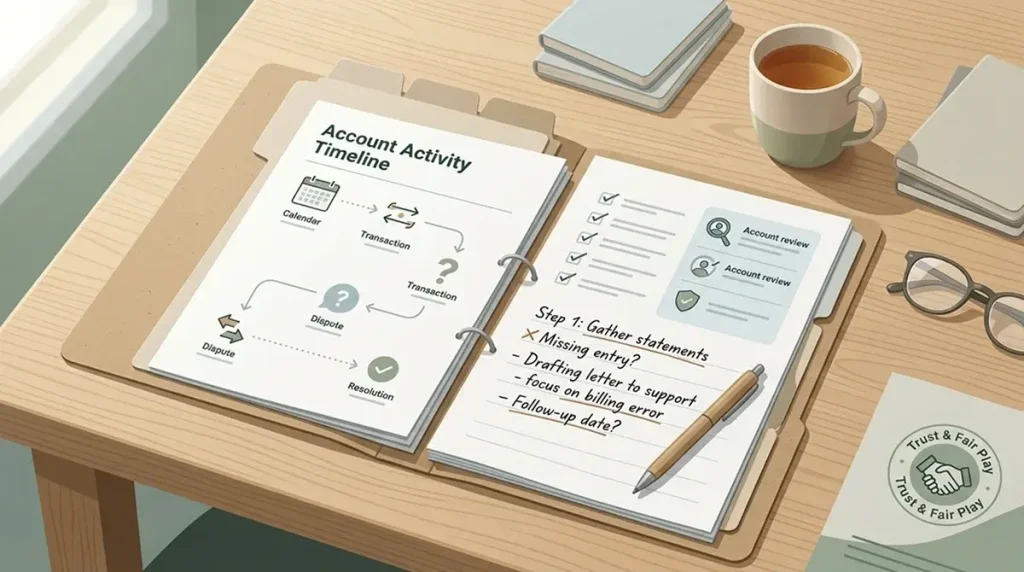
A delayed withdrawal, locked account or unclear balance can quickly turn a gambling account from a simple product into a stressful dispute. The safest response is not to add more money, argue from memory or rely on a chat transcript that may disappear. Treat the issue as a record-keeping task first: identify the business, write down the account details you can safely keep, save the terms that applied, and use the complaint route the operator provides.
This page explains the complaint and money-protection checks that matter before and after a problem appears. It focuses on the licensed Great Britain context where the Gambling Commission sets expectations for complaint procedures, alternative dispute resolution and account information. It does not promise a refund, a withdrawal outcome or action by a regulator. It gives you a calm path for organising the facts and deciding which official route fits the problem.
Clear Steps for Resolving UK Casino Money Disputes
Different problems need different routes. A consumer dispute is usually about the account relationship: a withdrawal has not arrived, a bonus condition was applied unexpectedly, an account has been restricted, or the balance shown in the account does not match what the user expected. Suspicious activity, criminality or a business that appears to be operating without the right permission is a different kind of concern. The Gambling Commission has separate routes for reporting suspicious activity, criminality or unlicensed gambling, but that reporting route is not the same as a complaint process for recovering individual money.
That distinction matters because mixing the routes can waste time. If the issue is a dispute with a licensed business, the complaint process and any recognised dispute arrangement are the practical route to understand. If the issue is a site that cannot be matched to the official register, uses a misleading licence claim or appears to be outside the regulated market, the first task is to stop relying on the site and check the official record. The page on checking the official register explains that separate step.
Recommended online casinos
- BeOnBetBonus: 100% up to €500 + 100 FS · Payout speed: 1-3 business days
- WinBeastBonus: €5000 + 500 FS + €650 Freebet · Payout speed: 1-3 business days
- BritsinoBonus: Welcome Package – Get your £2,200 + 2,000 FS · Payout speed: 1-3 business days
- AmunbetBonus: Join now and get 450% up to 2,700 GBP + 450 FS · Payout speed: 1-3 business days
- x3betBonus: Welcome Pack 100% Up to £1.000 + 200 Free Spins · Payout speed: 1-3 business days
- NightLuckBonus: Welcome Pack + 805% Up To 6400€ + 280 FS · Payout speed: 1-3 business days
What licensed businesses should make available
In the licensed market, gambling businesses must have complaint procedures. They must also have alternative dispute resolution arrangements when a dispute remains unresolved after eight weeks. That does not mean every complaint will succeed, and it does not mean an outside body will agree with the customer. It means there should be a route to follow, with the unresolved-dispute threshold clearly understood before the matter is escalated.
Licensed businesses should also provide clear account information. The Gambling Commission’s public guidance refers to information such as transactions, time spent gambling, account limits, reality checks, account fees and terms. For a money dispute, those records matter because they help separate a feeling that something is wrong from the exact account events that need to be explained.
A gambling business should also state in its terms how customer money is protected if the business goes bust. Do not turn that statement into an assumption that your money is fully protected. Read the exact wording. If the wording is vague, hard to find or inconsistent with the business details, that is a reason to slow down rather than deposit more money.
A dispute-preparation path
- Stop adding funds to solve the dispute. A delayed withdrawal or restricted account should not be answered with another deposit. More deposits can make the account history harder to untangle and may increase harm if you are already chasing losses.
- Record the facts in order. Write down the date, time, account name, exact domain, payment reference if available, amount involved and the specific decision or delay you are challenging.
- Save the relevant terms. Keep copies of withdrawal terms, bonus terms, verification rules, fee wording, complaint information and the customer-money protection statement that applied at the time you used the account.
- Use the operator’s complaint channel. A normal support chat is not always the same as a formal complaint. Look for the route described in the terms or complaint page and keep the reference numbers or email records.
- Track the unresolved-dispute point. For licensed businesses, ADR arrangements become relevant when a dispute remains unresolved after eight weeks. Do not assume the route is available immediately or that it decides every kind of complaint.
- Report suspicious or unlicensed activity separately. If the issue is about suspected criminality, misleading licence claims or unlicensed gambling, use the relevant reporting route rather than treating it as only a customer-service complaint.
The path above is not a legal template. It is a way to keep the record clean so that the next person reading the complaint can see what happened, what rule or term is being questioned and what outcome you are asking the operator to explain.
Evidence to keep before the page changes
| Record | Why it helps | What to avoid |
|---|---|---|
| Exact website domain and business name | Helps compare the account with official register information and complaint details. | Do not rely on a logo or badge without matching the details. |
| Transaction history and payment references | Shows amounts, dates and whether a disputed withdrawal or deposit appears in the account record. | Do not share bank screenshots publicly or with unrelated parties. |
| Terms and customer-money wording | Shows what the operator said about withdrawals, account restrictions and protection if the business fails. | Do not assume protection is stronger than the exact wording says. |
| Complaint messages and reference numbers | Creates a timeline of what you asked and how the operator replied. | Do not edit messages or remove context when sending the record onward. |
| Identity or verification requests | Helps show whether the account issue is about documents, payment checks or terms. | Do not upload extra documents to a site whose identity and privacy information are unclear. |
Customer money protection wording
Customer-money protection is often misunderstood. A statement in the terms is not the same as a guarantee that a balance will be paid in every situation. The practical question is narrower: does the business clearly say what happens to customer money if the business fails, and can you understand the level of protection before you deposit?
Look for the wording before a problem starts. If the statement is hidden, confusing or inconsistent with other pages, treat that as a risk marker. If the account is already in dispute, include the exact statement in your record. It may not decide the complaint by itself, but it helps show what information was provided to you and what you relied on when money was transferred.
Do not compare customer-money wording with marketing slogans. A site can advertise fast withdrawals, large offers or a foreign licence while still giving weak or unclear information about what happens to balances. For bonus and withdrawal wording specifically, use the separate page on bonus and withdrawal terms so the complaint page does not become a general offer guide.
Complaint, ADR or report: which route fits?
| Situation | Likely first route | Important limit |
|---|---|---|
| A withdrawal is delayed and the operator has not explained why. | Use the operator complaint process and keep the account records. | No route can guarantee payment without examining the terms and account facts. |
| A bonus condition was applied in a way you did not expect. | Save the offer terms and make a clear complaint about the specific condition. | This page does not decide whether the term is fair in an individual case. |
| The dispute with a licensed business remains unresolved after eight weeks. | Check the ADR information provided by the operator. | ADR availability and scope depend on the complaint and the regulated context. |
| The site cannot be matched to official register details. | Stop relying on the site and check the official record carefully. | A complaint route may be weaker or harder to verify outside the licensed market. |
| You suspect criminality or unlicensed gambling. | Use the Gambling Commission’s reporting route for suspicious activity or unlicensed gambling. | Reporting is not the same as a personal money-recovery service. |
When a dispute is linked to gambling harm
A money dispute can trigger a strong urge to keep gambling, especially when you feel that one more win would cover a delayed withdrawal or a lost balance. That is a dangerous moment to make account decisions. If you are chasing losses, using gambling to repair the dispute, or trying to open another account because this one is blocked, pause and use support steps before making another payment.
Practical protective actions can include keeping bank gambling blocks in place, avoiding new deposits, asking someone trusted to help you organise records, and using recognised gambling support. If self-exclusion is already in place, do not treat a dispute as a reason to look for another site. The page on self-exclusion and support steps keeps that help route separate from the complaint process.
Official pages worth using
- Gambling Commission guidance on information companies must give about your account
- LCCP condition on complaints and disputes
- Gambling Commission information on money and rights
- Gambling Commission complaints and reporting information
Related next checks
If the dispute started with a licence claim, return to the official register check guide. If the issue is a bonus or withdrawal condition, read the bonus and withdrawal terms checklist. If the operator is asking for documents or personal data during the dispute, use the privacy and data security checks before sending anything further.